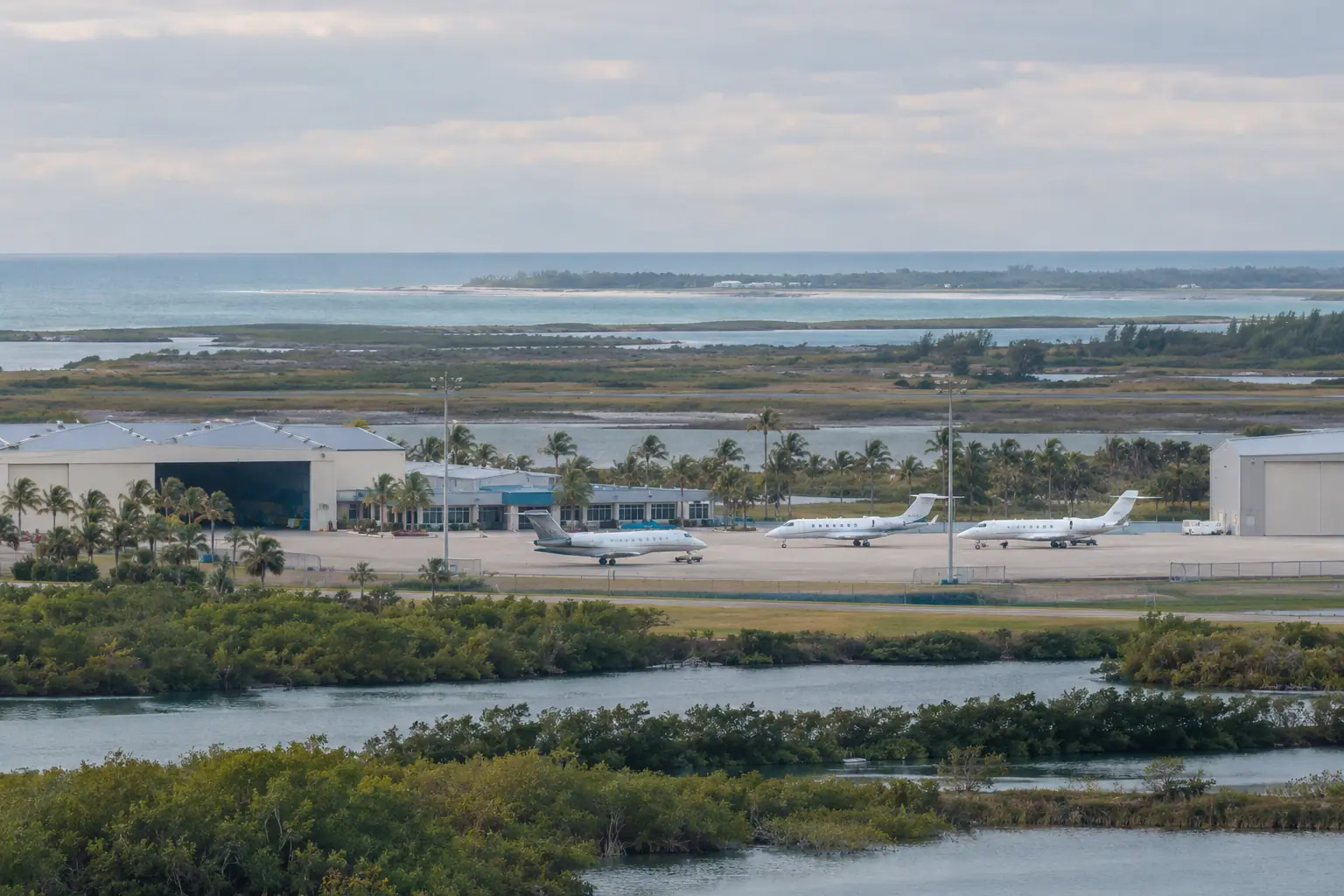
Private jet Boca Raton at KBCT
Boca Raton Airport sits 13 feet above sea level with a 6,276-foot runway. A private jet Boca Raton trip can reach the Strip 2,164 miles away. Here is how to plan the flight.
- KBCT · BCTairport codes
- 13 ftfield elevation
- 6,276 ftlongest runway
- 18 mito Las Olas Boulevard
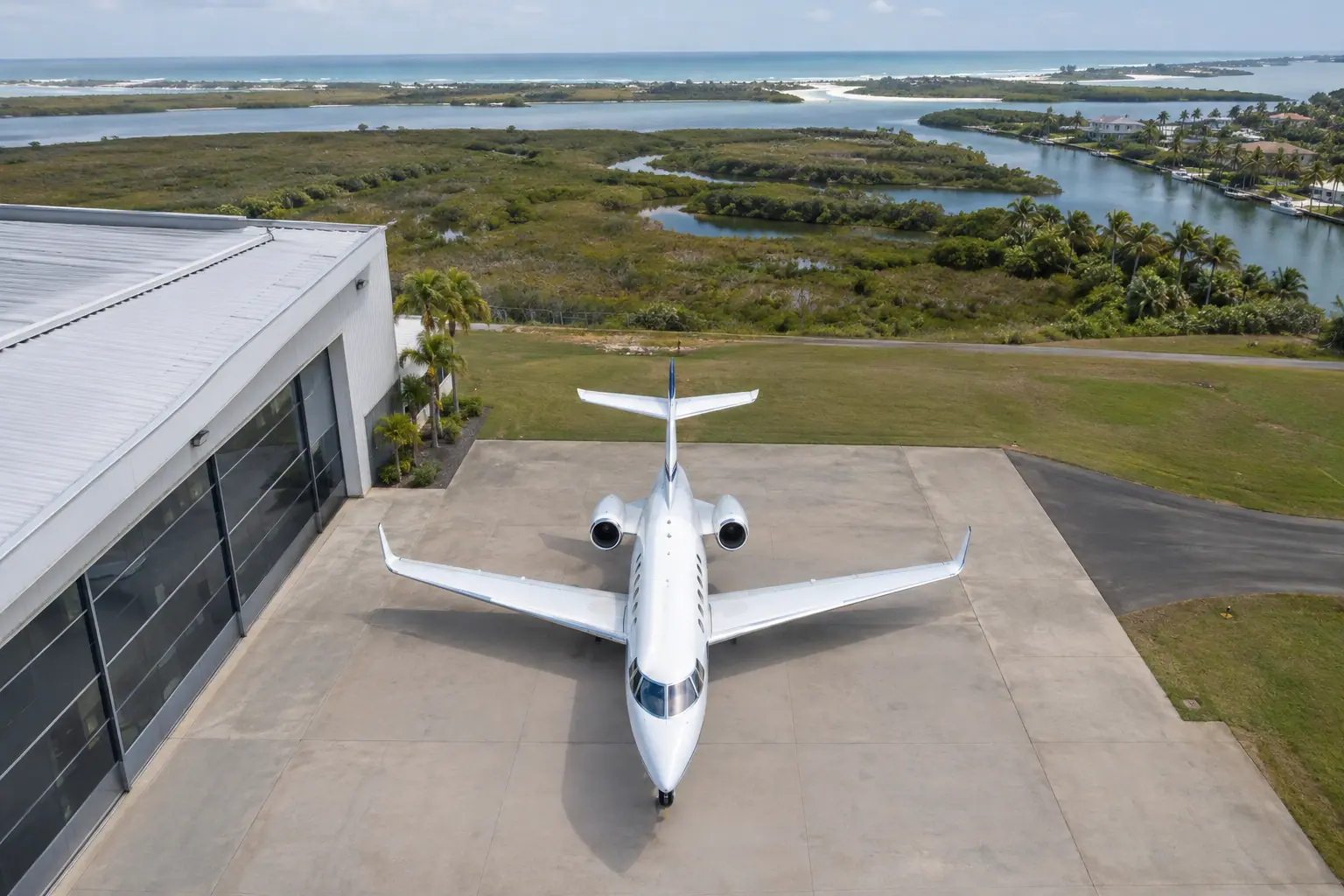
A private jet Boca Raton request begins with one question: does the trip fit KBCT's constraints? Boca Raton Airport is a compact, city-adjacent field at 13 feet elevation with a single 6,276-foot runway, so the airport suits light and midsize jets far better than heavy long-range aircraft. Operators fly in and out under FAA Part 135 authority, and we act as your broker under DOT Part 295 rules, matching your trip to a certificated operator rather than selling you an aircraft we own.
Because the runway is short by South Florida standards, aircraft choice drives everything. A light jet handles KBCT comfortably; a large-cabin jet may need to stage through Fort Lauderdale Executive, Miami-Opa Locka Executive or Fort Lauderdale Hollywood International, all within a short drive. When your aircraft exceeds the Boca Raton runway limits, then the trip moves to KFXE, KOPF or KFLL and the ground transfer changes your timing, so tell us your tail type early.
Pricing is an estimate, never a quote until an operator confirms. The 2,164-mile run to the Las Vegas Strip is a long leg for a light jet, so most travelers on that route choose a midsize or larger cabin and accept one fuel stop or a reposition to a longer runway nearby. For a charter or membership program, Boca Raton works best on regional and East Coast missions where the field's convenience beats raw runway length.
Charters here usually mean one of three things: a family heading to the Bahamas, a business traveler to New York or Chicago, or a snowbird repositioning between South Florida and the Northeast. Each profile points to a different aircraft class, and each carries its own baggage and range limits out of a 6,276-foot strip at near-sea-level elevation with warm-weather density altitude.
Runway length and what it means
Boca Raton's runway measures 6,276 feet at an airport elevation of 13 feet, which is generous for light jets and workable for many midsize types but tight for heavy long-range aircraft at higher temperatures. The 6,276-foot runway at 13 feet elevation shapes every aircraft decision at KBCT. Summer density altitude reaches about 1,900 feet in July and can climb to roughly 2,400 feet on a 115F day, which thins performance margins and reduces allowable takeoff weight. If a departure is heavy on fuel for a long leg, then the operator may cap payload or move the flight to a longer runway such as the 8,002-foot strip at Miami-Opa Locka Executive or the 9,000-foot runway at Fort Lauderdale Hollywood International. Runway length is not the only factor, but on hot afternoons it decides which jets can leave KBCT fully loaded.
| Runway | Length | Width | Surface |
|---|---|---|---|
| 05/23 | 6,276 ft | 150 ft | Asphalt |
FBOs and ground handling at KBCT
Three FBOs serve Boca Raton Airport: Atlantic Aviation, Signature Aviation and Stellar Aviation of South Palm Beach, so ground handling choice is real rather than automatic. Atlantic Aviation, Signature Aviation and Stellar Aviation of South Palm Beach handle KBCT ground operations. Your operator typically has a preferred provider, and we confirm which one before you book so arrival, parking and departure flow predictably.
Ground time matters on a short field. If your jet needs fuel, lavatory service and catering before a morning departure, then the FBO schedule and ramp space can affect your departure slot, especially in peak winter season when South Florida traffic rises. For international legs, CBP clearance is arranged in advance; KBCT is not a full-time port of entry for every itinerary, so we verify clearance options rather than assume them. We never name aircraft we do not control; we confirm the operator, tail number and FBO in writing before you commit.
Best for
- Regional and East Coast trips where a 6,276-foot runway and 13-foot elevation comfortably fit light and midsize jets
- Bahamas and Caribbean runs, with CBP clearance confirmed in advance for international legs
- Business travel to New York, Chicago and Dallas, where a city-adjacent field saves ground time
- Winter snowbird repositioning between South Florida and the Northeast, booked early for holiday availability
| Class | Typical runway needed | Here |
|---|---|---|
| Turboprop | 3,300 ft+ | Fit |
| Light jet | 4,000 ft+ | Fit |
| Midsize jet | 5,000 ft+ | Fit |
| Super-midsize jet | 5,200 ft+ | Fit |
| Heavy jet | 5,600 ft+ | Fit |
Weather and density altitude planning
Boca Raton's warm season pushes density altitude from roughly 1,100 feet in January to about 1,900 feet in July and August, with a peak near 2,400 feet at 115F. Summer density altitude near 2,400 feet at 115F is the real constraint on KBCT departures. Those numbers are modest compared with high-altitude airports, but they still trim takeoff performance on a 6,276-foot runway when the cabin is full and the fuel load is heavy.
Rain is the other seasonal factor. Wet days run from about 9 in January and March up to 25 or 26 in June and August, so afternoon thunderstorms are a routine summer planning item rather than an exception. If you fly in June through September, then build slack into your schedule for convective weather and possible reroutes. Winter brings the opposite pattern: fewer wet days, cooler air, better performance and the heaviest demand from snowbird traffic, which means FBO slots and aircraft availability tighten around holidays.
| Month | Avg high | Wet days | Density altitude |
|---|---|---|---|
| Jan | 75°F | 9 | 1,100 ft |
| Feb | 77°F | 12 | 1,200 ft |
| Mar | 79°F | 9 | 1,300 ft |
| Apr | 82°F | 12 | 1,500 ft |
| May | 84°F | 16 | 1,700 ft |
| Jun | 86°F | 25 | 1,800 ft |
| Jul | 87°F | 24 | 1,900 ft |
| Aug | 87°F | 26 | 1,900 ft |
| Sep | 86°F | 24 | 1,800 ft |
| Oct | 83°F | 18 | 1,600 ft |
| Nov | 80°F | 13 | 1,400 ft |
| Dec | 77°F | 12 | 1,200 ft |
Access and ground transfer
Boca Raton Airport sits close to the city's downtown and beach corridor, which is the main reason travelers pick it over the larger South Florida fields. A private jet Boca Raton arrival puts you minutes from downtown rather than in the international terminal crowds. If your aircraft cannot use the 6,276-foot runway, then the drive from Fort Lauderdale Executive, Miami-Opa Locka Executive or Fort Lauderdale Hollywood International adds ground time you should budget for. We coordinate the transfer and confirm which airport your operator will actually use before you leave.
Private jet routes via Boca Raton
These 6 private jet routes cover 508 to 2,033 nautical miles, with one-way light jet estimates ranging from $6,000 to $35,000.
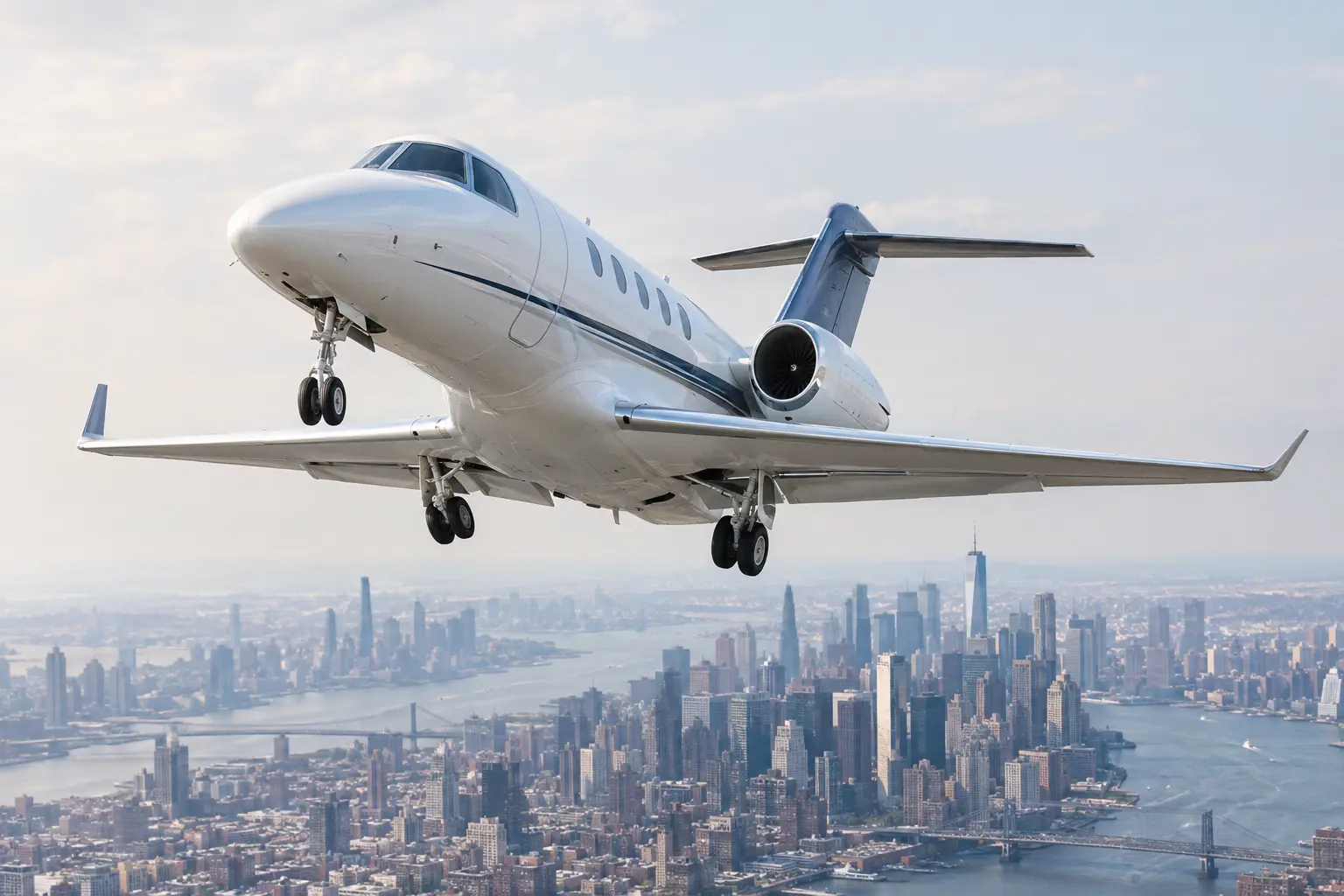
New York → Fort Lauderdale
- 2h 34m
- $10,000–$15,000
- 931 nm
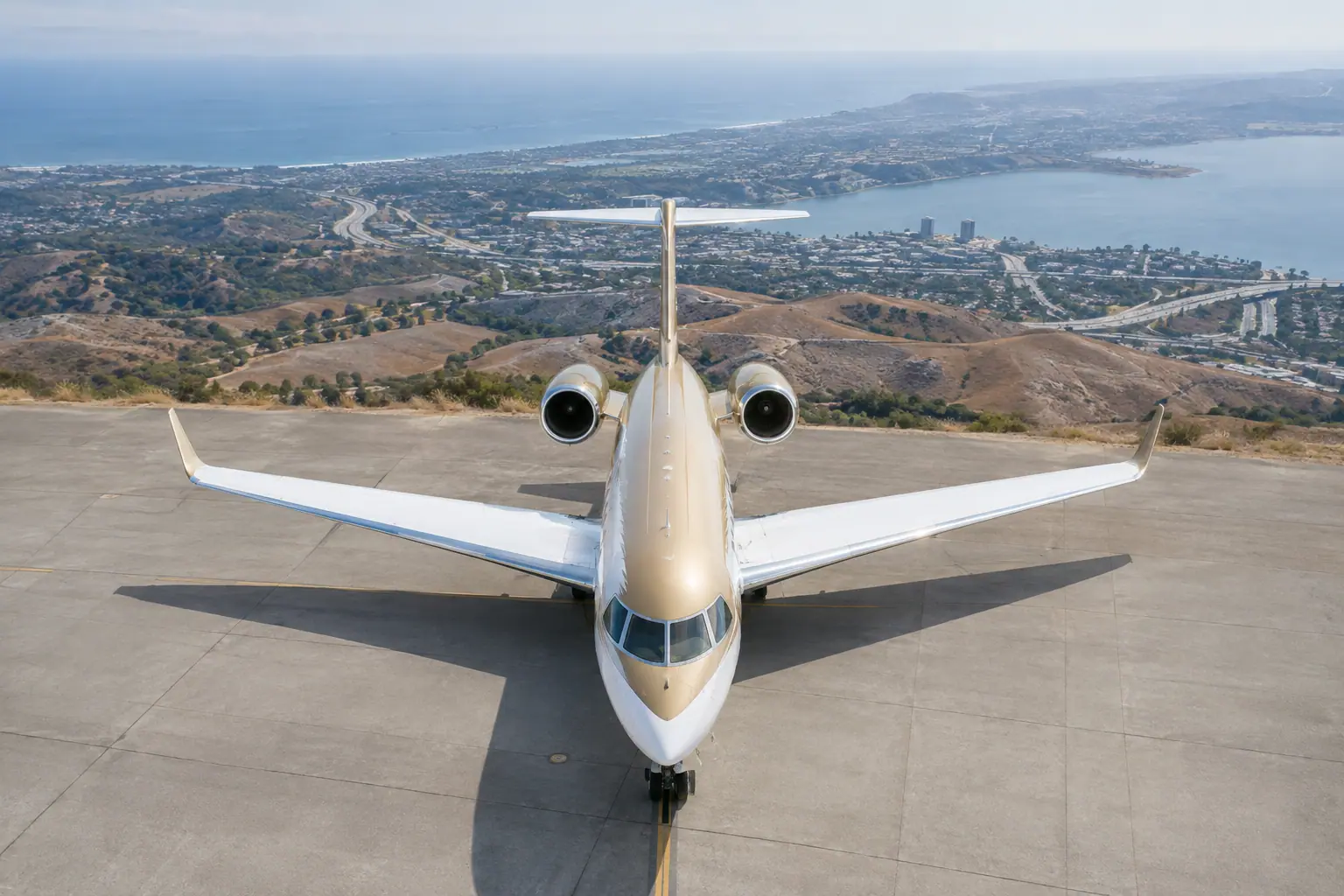
Los Angeles → Fort Lauderdale
- 6h 01m
- $23,000–$35,000
- 2,033 nm
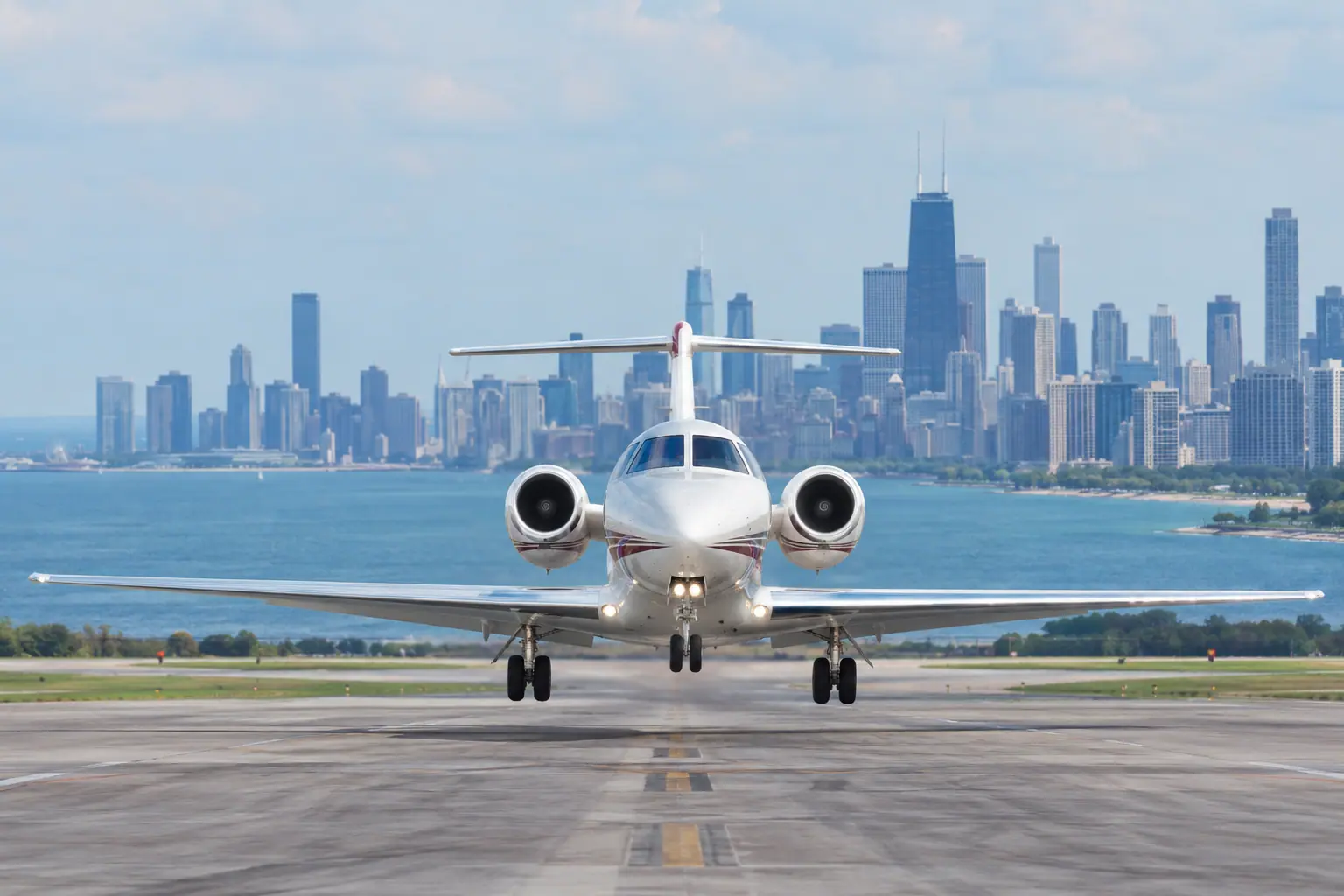
Chicago → Fort Lauderdale
- 2h 46m
- $10,500–$16,000
- 1,008 nm
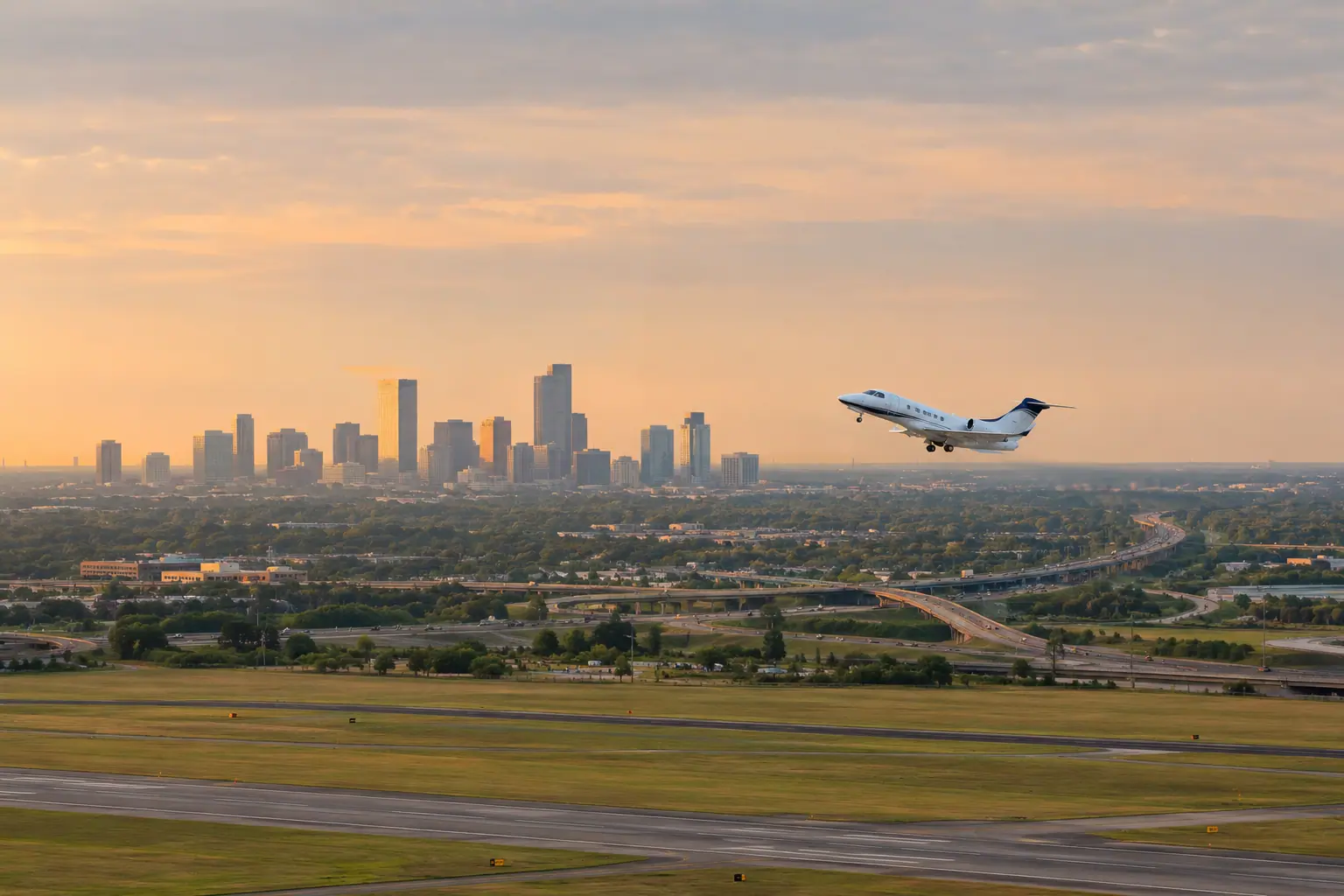
Dallas → Fort Lauderdale
- 2h 38m
- $10,000–$15,500
- 957 nm
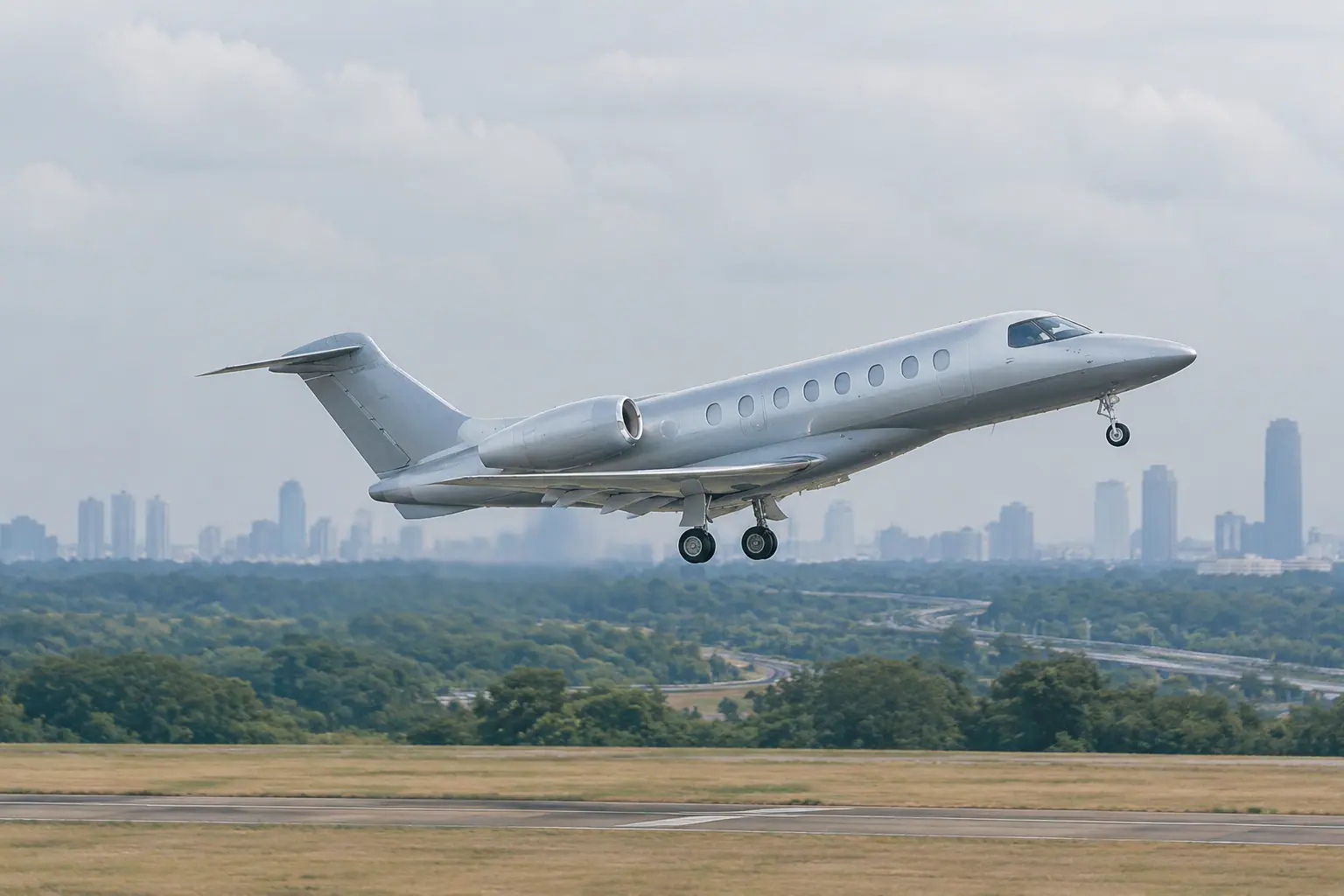
Houston → Fort Lauderdale
- 2h 19m
- $9,000–$13,500
- 827 nm
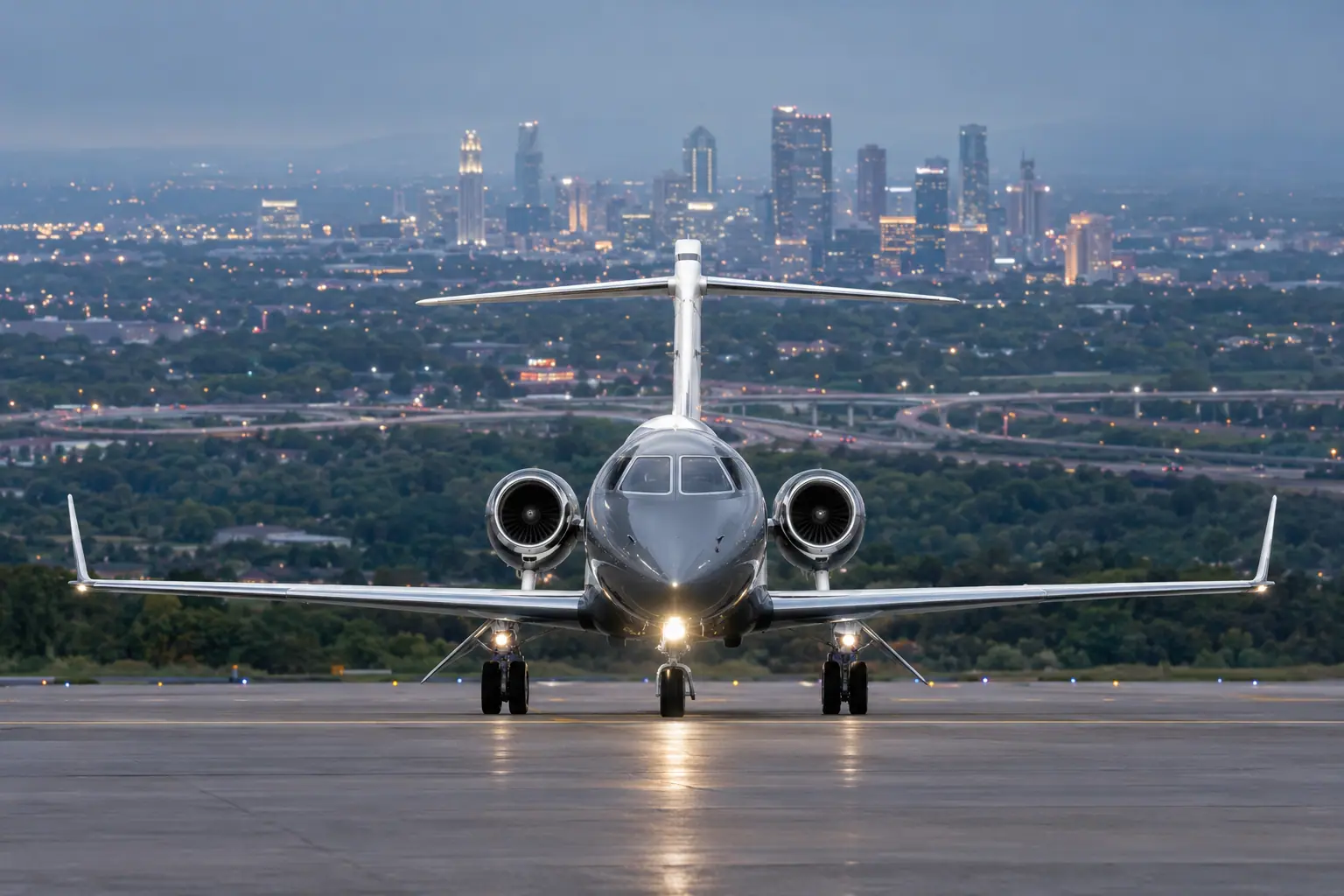
Atlanta → Fort Lauderdale
- 1h 32m
- $6,000–$9,000
- 508 nm
Questions for this airport
Can a private jet Boca Raton mission use KBCT for a long-haul flight?
Sometimes, but not always. KBCT has a 6,276-foot runway at 13 feet elevation, so light and midsize jets fit well while heavy long-range aircraft often cannot depart fully loaded in summer heat. The 2,164-mile trip to the Las Vegas Strip is a good example: many operators prefer a larger cabin and may reposition to Miami-Opa Locka Executive's 8,002-foot runway or Fort Lauderdale Hollywood International's 9,000-foot strip.
How much does a charter flight out of Boca Raton cost?
Any figure you see is an estimate until an operator confirms the tail and crew. Cost depends on aircraft class, the 2,164-mile distance to the Strip, fuel stops and crew duty time, plus FBO fees at Atlantic Aviation, Signature Aviation or Stellar Aviation of South Palm Beach. We present itemized estimates from FAA Part 135 operators so you can compare like with like rather than guess.
Which jet classes handle the Boca Raton runway best?
Light and midsize jets are the natural fit for a 6,276-foot runway at 13 feet elevation. Heavy jets can use KBCT in cooler conditions with reduced fuel or payload, but summer density altitude near 1,900 feet in July and a peak around 2,400 feet at 115F narrow the margin. If your trip needs a heavy cabin, then plan on a nearby longer runway and a short ground transfer.
Is Boca Raton Airport a port of entry for international flights?
Not for every itinerary, so we verify rather than assume. International legs, including common Bahamas runs, need CBP clearance arranged in advance, and the operator confirms whether KBCT, Fort Lauderdale Hollywood International or another field handles it. If your flight returns from abroad, then build extra time for customs and have passenger documents ready before departure day.
How does weather affect departures from KBCT?
Heat and rain both matter. Density altitude moves from about 1,100 feet in January to roughly 1,900 feet in July and August, and wet days climb from about 9 in January to 25 or 26 in June and August. If you fly in summer, then expect afternoon storms and possible reroutes, and plan morning departures where the schedule allows for better performance and fewer delays.
When should I book a winter charter to or from Boca Raton?
Book early for December through March. Cooler air improves performance, with January density altitude around 1,100 feet and highs near 75F, and wet days drop back to 9 or 12, which makes this the busiest window for South Florida traffic. If your dates fall near holidays, then lock in the aircraft and FBO slot weeks ahead, since availability tightens and estimates move with demand.