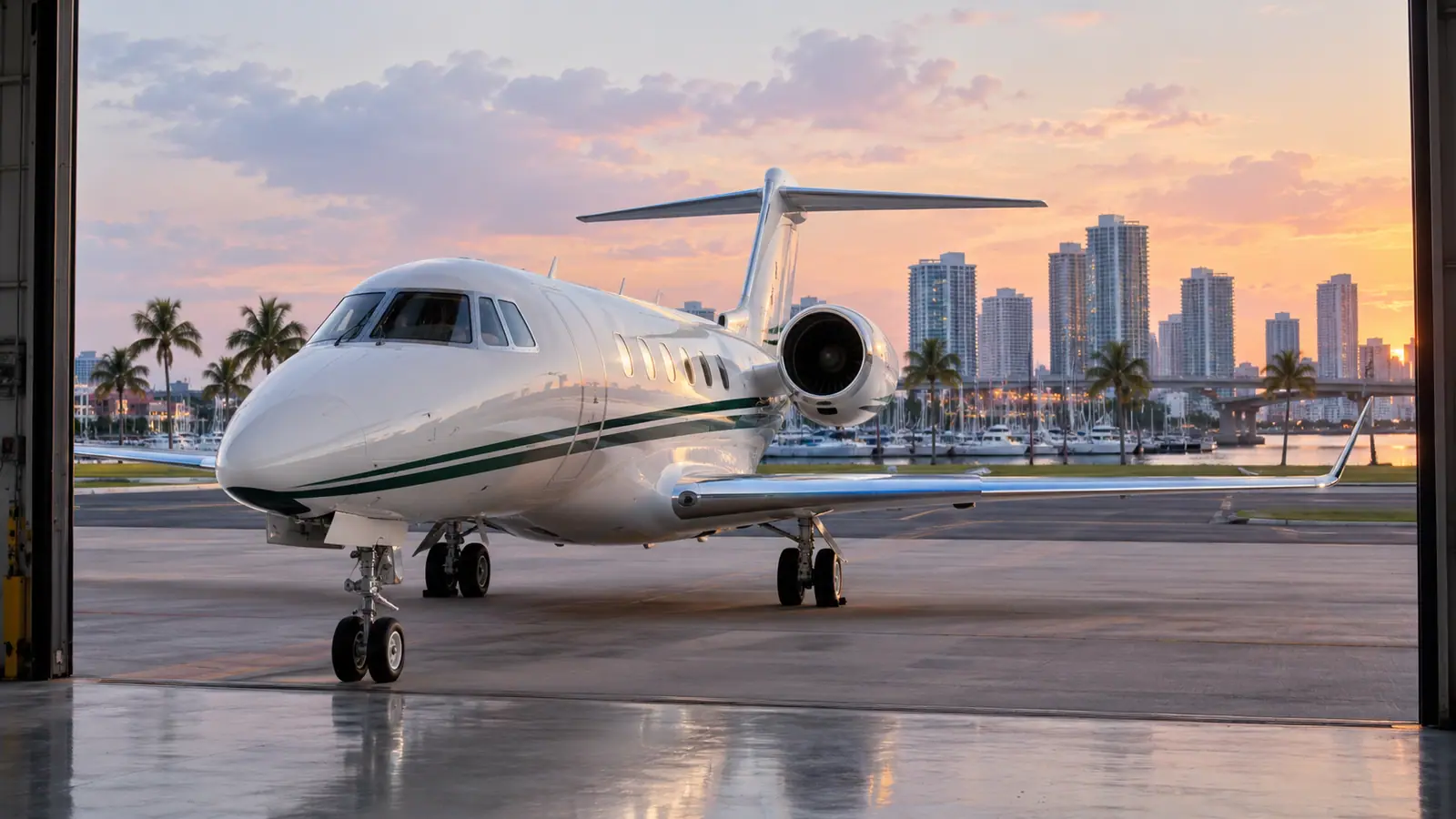
Private Jets Fort Lauderdale
Private jets Fort Lauderdale travelers book range from light jets to heavy cabin aircraft. A light jet charter from New York starts around $10,000. This guide explains airports, costs, and seasonal factors.
- 24Priced routes
- 4airports
- $2,200lowest hourly estimate
- 2h 34mNew York to Fort Lauderdale, light jet
Estimate your trip
Choose a route, travelers and bags to see the suitable class, the flight duration and an estimated price range.
- Charter agents pick up 24/7
- FAA Part 135 operators only
- Full quote upfront before you book

Best times to book in Fort Lauderdale
Fort Lauderdale's peak charter season runs from November through April, when snowbirds and winter events drive demand. Rates and availability tighten around holidays and major events like the Fort Lauderdale International Boat Show. Book at least two to three weeks ahead for winter travel. Summer offers more availability but comes with afternoon storms and higher density altitudes.
If your schedule is flexible, consider flying midweek or during off-peak hours. Empty legs, where an aircraft repositions without passengers, can offer significant savings on one-way trips. Ask your broker about these opportunities, especially for routes like Fort Lauderdale to New York or Nassau.
Popular routes from Fort Lauderdale
The busiest charter routes from Fort Lauderdale link South Florida to the Northeast, with New York (931 nm) and Boston (1,070 nm) seeing frequent light jet traffic. A light jet from Fort Lauderdale to New York takes about 2 hours 34 minutes and costs an estimated $10,000 to $15,000. Chicago (1,008 nm) and Dallas (957 nm) are also common. For the Caribbean, Nassau is 162 nm, and Turks and Caicos is 508 nm, both easily reached in a light jet.
Westbound routes like Los Angeles (2,033 nm) and San Francisco (2,237 nm) require longer-range aircraft and typically cost $23,000 to $38,000 in a light jet. Seasonal demand spikes to Aspen (1,550 nm) and Jackson Hole (1,816 nm) in winter. A Fort Lauderdale to Aspen charter in a light jet runs $18,500 to $28,000 and takes about 4 hours 50 minutes. Empty legs can reduce costs on some routes; ask your broker about one-way pricing.
- New York → Fort Lauderdale2h 34m
- Los Angeles → Fort Lauderdale6h 01m
- Chicago → Fort Lauderdale2h 46m
- Dallas → Fort Lauderdale2h 38m
- Houston → Fort Lauderdale2h 19m
- Atlanta → Fort Lauderdale1h 32m
- Washington, DC → Fort Lauderdale2h 12m
- Boston → Fort Lauderdale2h 55m
- Philadelphia → Fort Lauderdale2h 26m
- Denver → Fort Lauderdale4h 39m
- Phoenix → Fort Lauderdale5h 14m
- San Francisco → Fort Lauderdale6h 31m
- Seattle → Fort Lauderdale6h 48m
- Las Vegas → Fort Lauderdale5h 39m
- Nashville → Fort Lauderdale1h 58m
- Charlotte → Fort Lauderdale1h 38m
- Fort Lauderdale → New York2h 34m
- Fort Lauderdale → Los Angeles6h 01m
- Fort Lauderdale → Aspen4h 50m
- Fort Lauderdale → Nassau0h 42m
- Fort Lauderdale → Cabo San Lucas5h 00m
- Fort Lauderdale → Turks and Caicos1h 32m
- Fort Lauderdale → The Hamptons2h 40m
- Fort Lauderdale → Jackson Hole5h 29m
Private jet charter costs in Fort
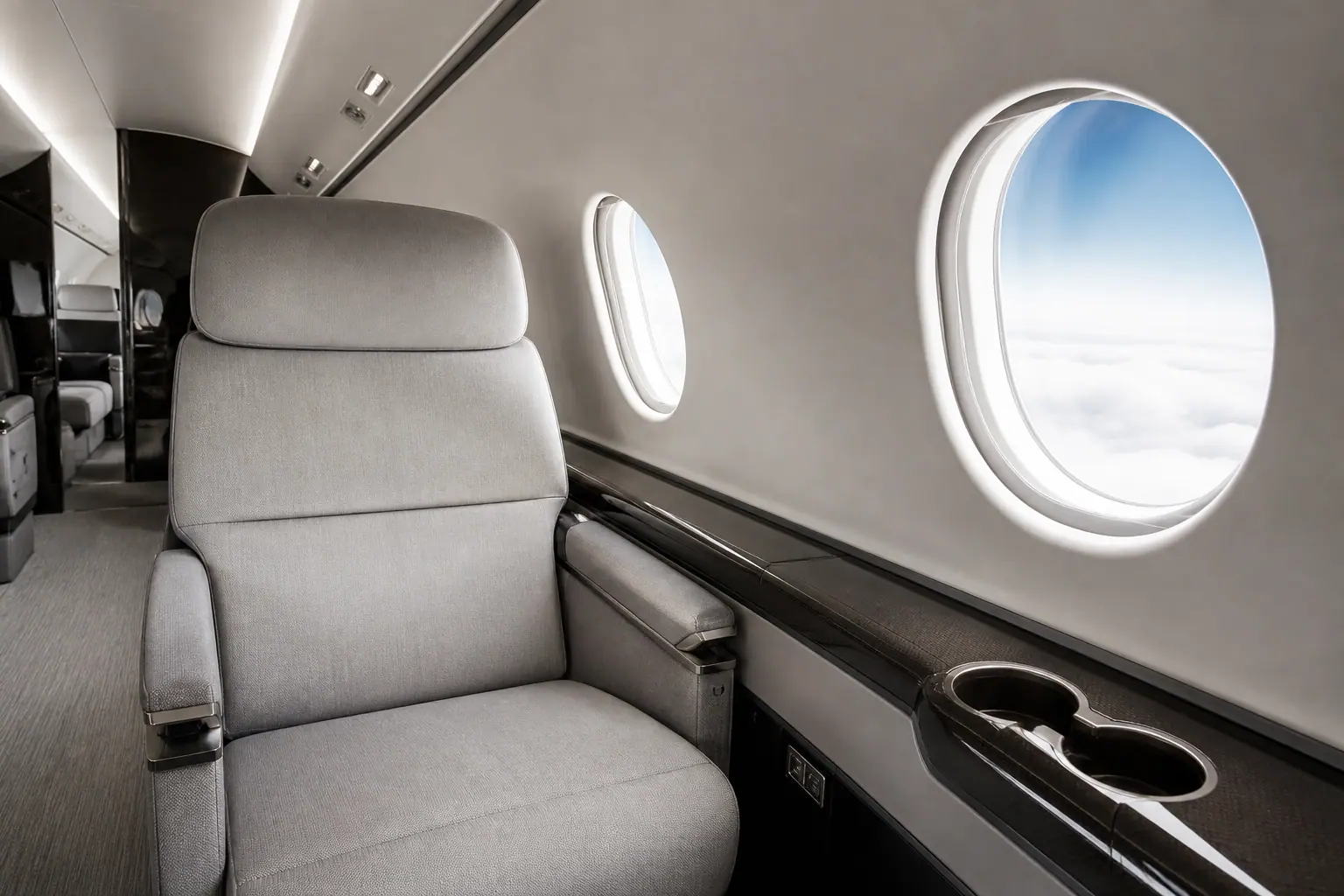
Private jets Fort Lauderdale charter costs depend on aircraft class, distance, and time of year. Light jet hourly rates run from $3,800 to $5,800 and cover most short-haul trips. A typical light jet flight from New York to Fort Lauderdale (931 nm) is estimated at $10,000 to $15,000. Turboprops start lower at $2,200 to $3,500 per hour, while heavy jets reach $9,500 to $14,500 per hour for transcontinental or international legs. These are estimates; final quotes depend on operator availability and dates.
For a Fort Lauderdale to Nassau hop, expect about $4,000 to $6,000 in a light jet for the 162 nm trip. Longer routes like Los Angeles to Fort Lauderdale (2,033 nm) run $23,000 to $35,000. When comparing quotes, ask whether crew overnight, landing fees, and fuel surcharges are included. As a DOT Part 295 broker, we arrange flights but never operate aircraft; each flight is provided by an FAA Part 135 operator who holds operational control.
| Class | Seats | Hourly est. | New York → Fort Lauderdale |
|---|---|---|---|
| Turboprop | 6-8 | $2,200–$3,500 | $8,000–$12,500 |
| Light jet | 4-7 | $3,800–$5,800 | $10,000–$15,000 |
| Midsize jet | 7-9 | $5,200–$7,800 | $13,000–$19,500 |
| Super-midsize jet | 8-10 | $7,200–$10,000 | $17,000–$24,000 |
| Heavy jet | 10-14 | $9,500–$14,500 | $22,500–$34,500 |
Airports for Fort Lauderdale private
Four airports serve the Fort Lauderdale area, each with different runway lengths and FBO options. KFXE is the closest to the beach and downtown, with a 6,002 ft runway and FBOs Signature Aviation and Atlantic Aviation. KOPF offers an 8,002 ft runway and four FBOs, while KBCT and KFLL provide alternatives. Choosing the right airport can cut ground time significantly.
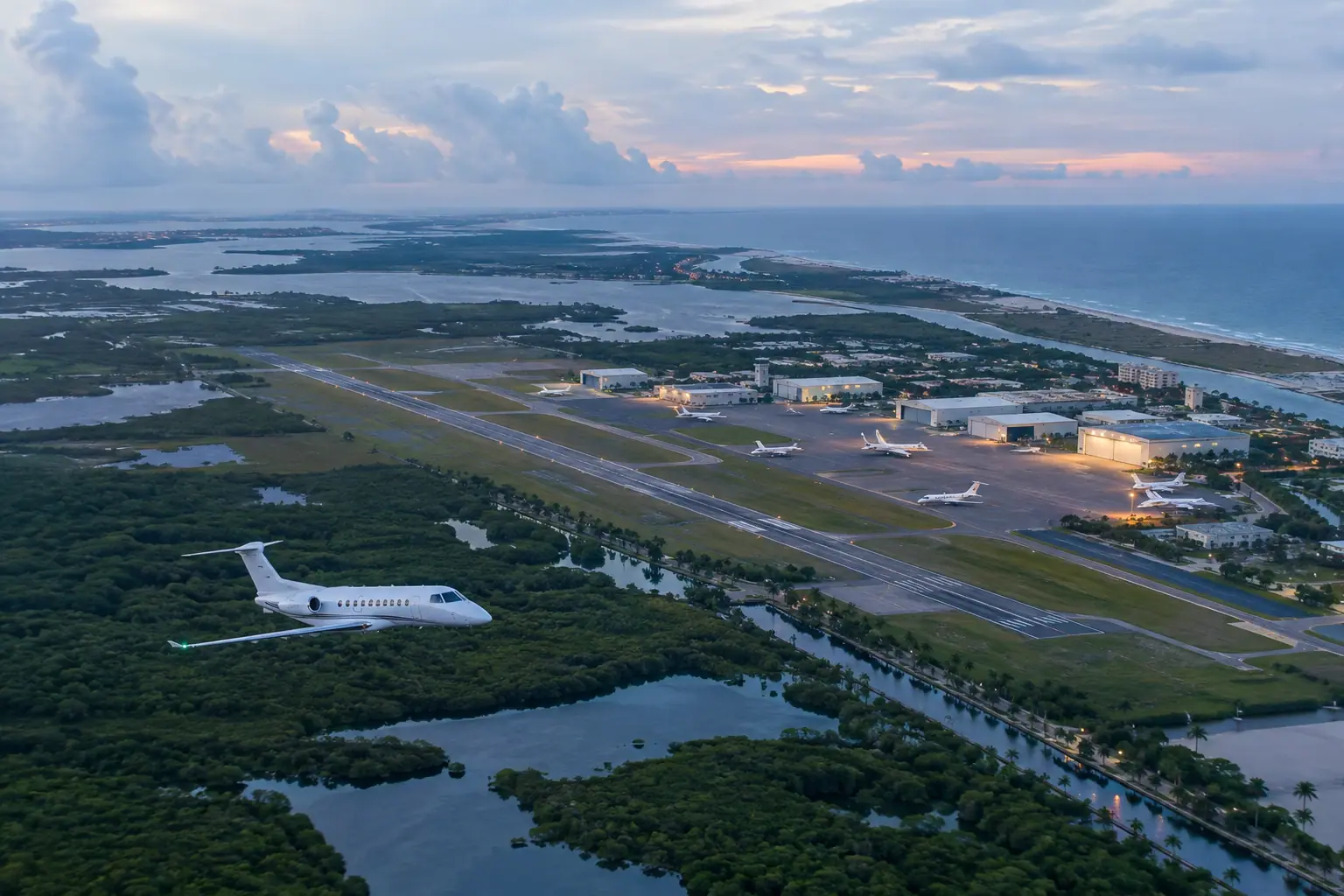
Fort Lauderdale Executive Airport
- KFXE code
- 6,002 ft runway
- 5 mi to Las Olas Boulevard
Fort Lauderdale Executive Airport (KFXE) sits 13 ft above sea level with a 6,002 ft runway and FBOs Signature Aviation and Atlantic Aviation. It is the most convenient for downtown and the beach. On hot July afternoons, density altitude reaches about 1,900 ft, and at 115°F it peaks at 2,400 ft, which can reduce payload on light jets. Plan early departures in summer for best performance.
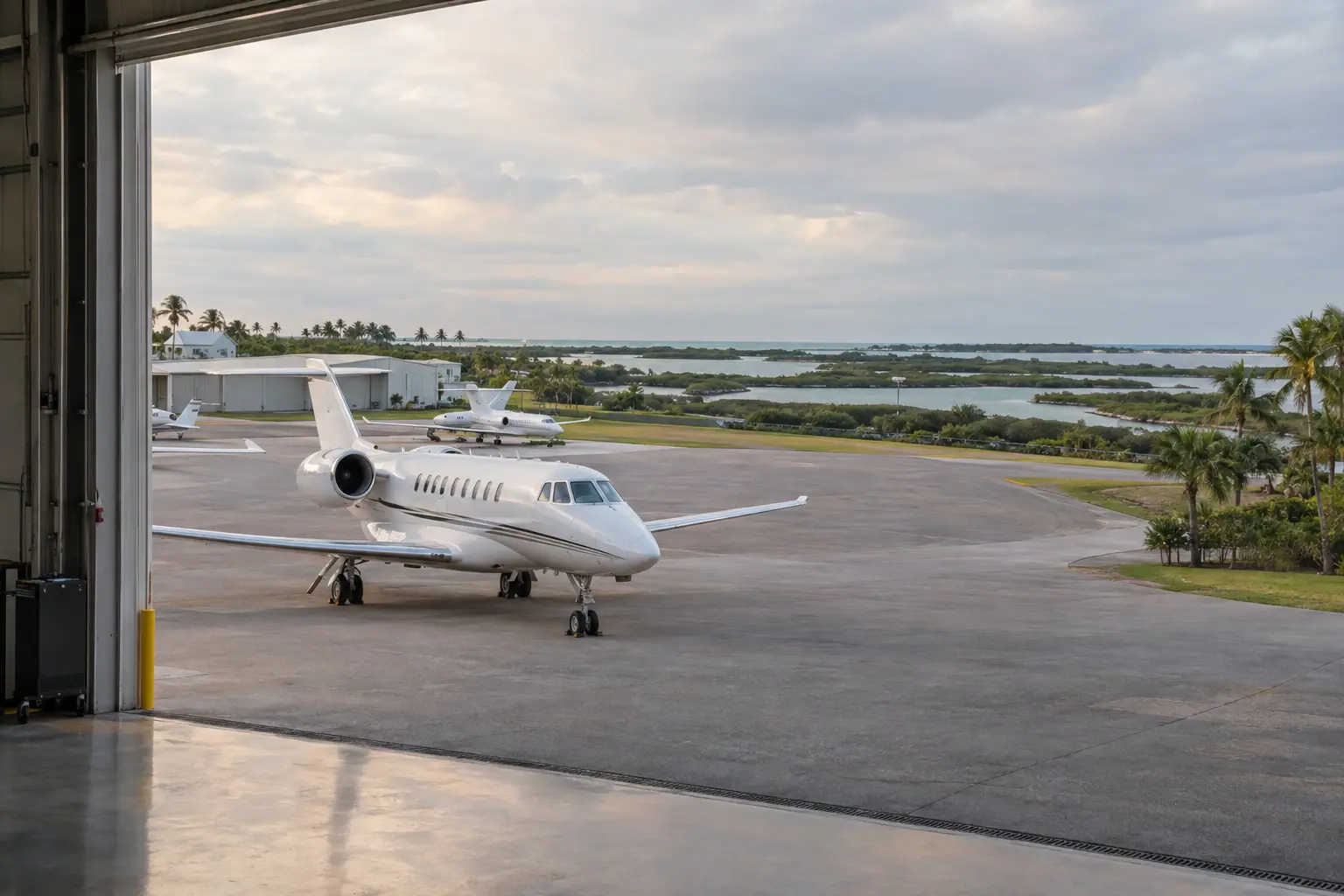
Miami-Opa Locka Executive Airport
- KOPF code
- 8,002 ft runway
- 17 mi to Las Olas Boulevard
Miami-Opa Locka Executive Airport (KOPF) is 8 ft above sea level with an 8,002 ft runway, the longest among the four. It hosts four FBOs: Atlantic Aviation, Signature Aviation, Jet Aviation, and Fontainebleau Aviation. The longer runway helps on hot days when density altitude climbs to 1,900 ft in July and 2,400 ft at 115°F. It is a good choice for larger jets and international departures.
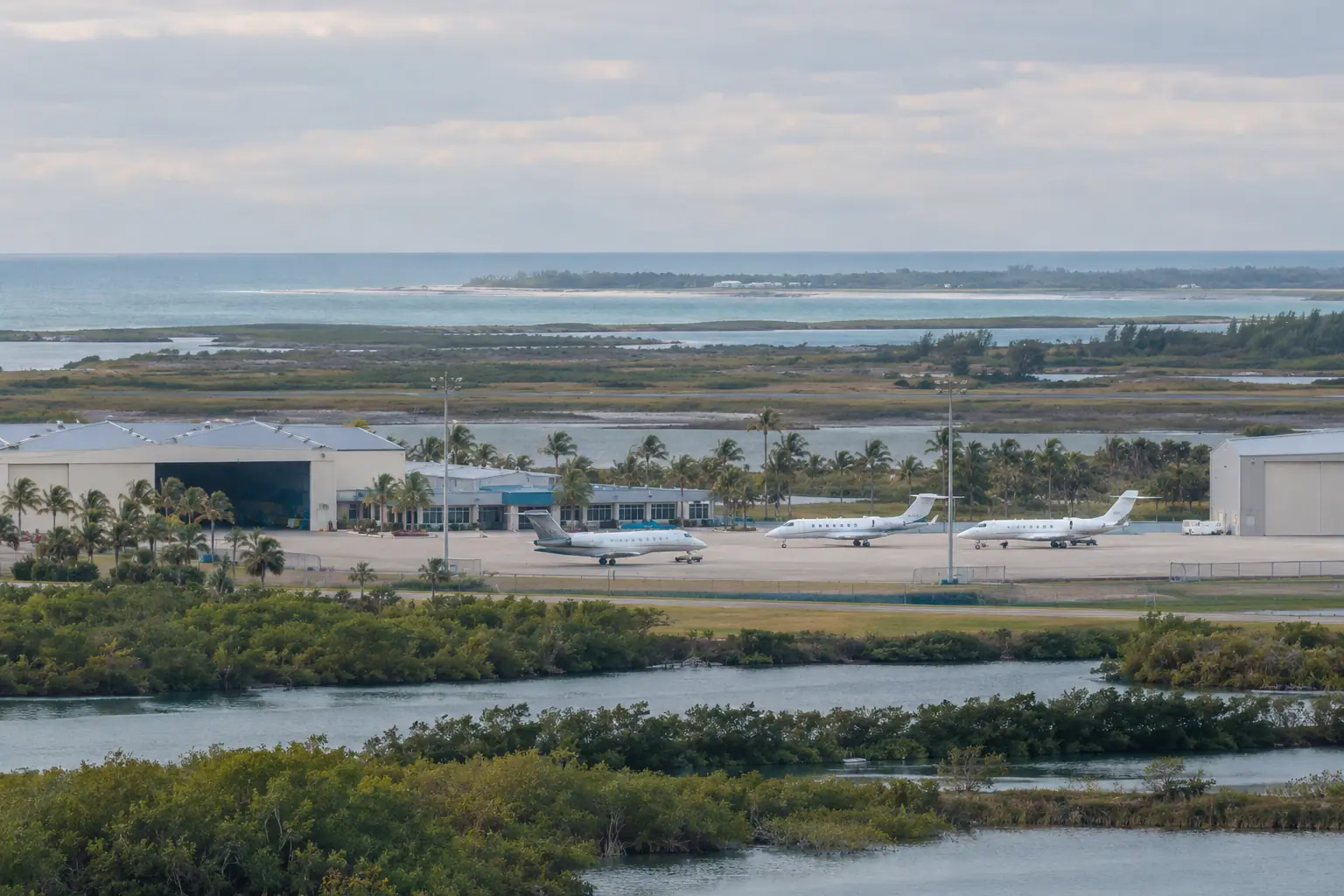
Boca Raton Airport
- KBCT code
- 6,276 ft runway
- 18 mi to Las Olas Boulevard
Boca Raton Airport (KBCT) has a 6,276 ft runway at 13 ft elevation, with FBOs Atlantic Aviation, Stellar Aviation of South Palm Beach, and Signature Aviation. It serves the northern suburbs well. Summer density altitude averages 1,900 ft in July and can reach 2,400 ft at 115°F, so light jets may need runway-length checks. Customs is available for international arrivals with prior notice.
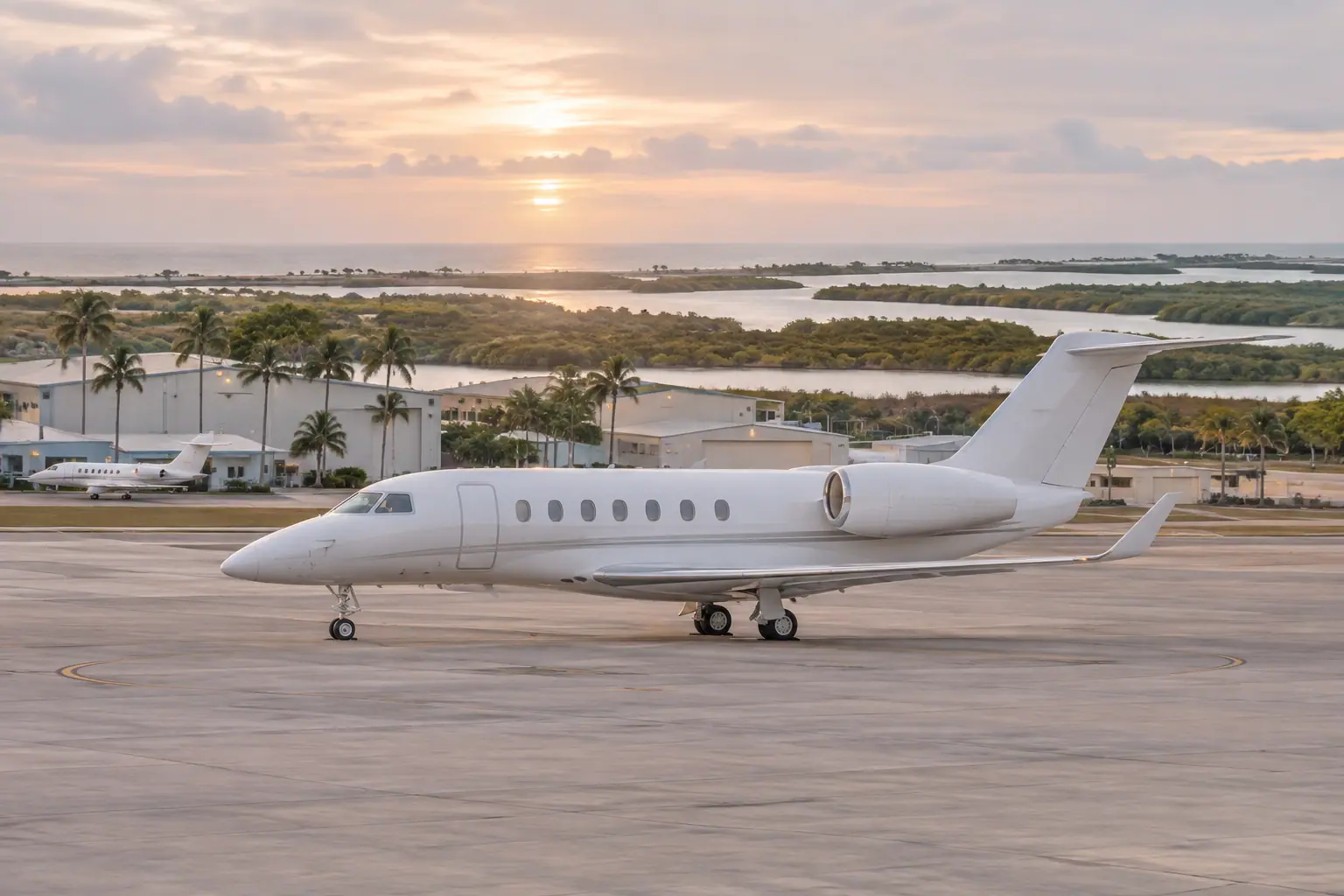
Fort Lauderdale Hollywood International Airport
- KFLL code
- 9,000 ft runway
- 3 mi to Las Olas Boulevard
Fort Lauderdale Hollywood International Airport (KFLL) is 9 ft above sea level with a 9,000 ft runway, the longest in the group. FBOs include Sheltair, Fontainebleau Aviation (a Skyservice company), and Signature Aviation. It handles airline traffic but offers private jet services. Density altitude reaches 1,900 ft in July and 2,400 ft at 115°F. It is a U.S. port of entry, useful for international returns.
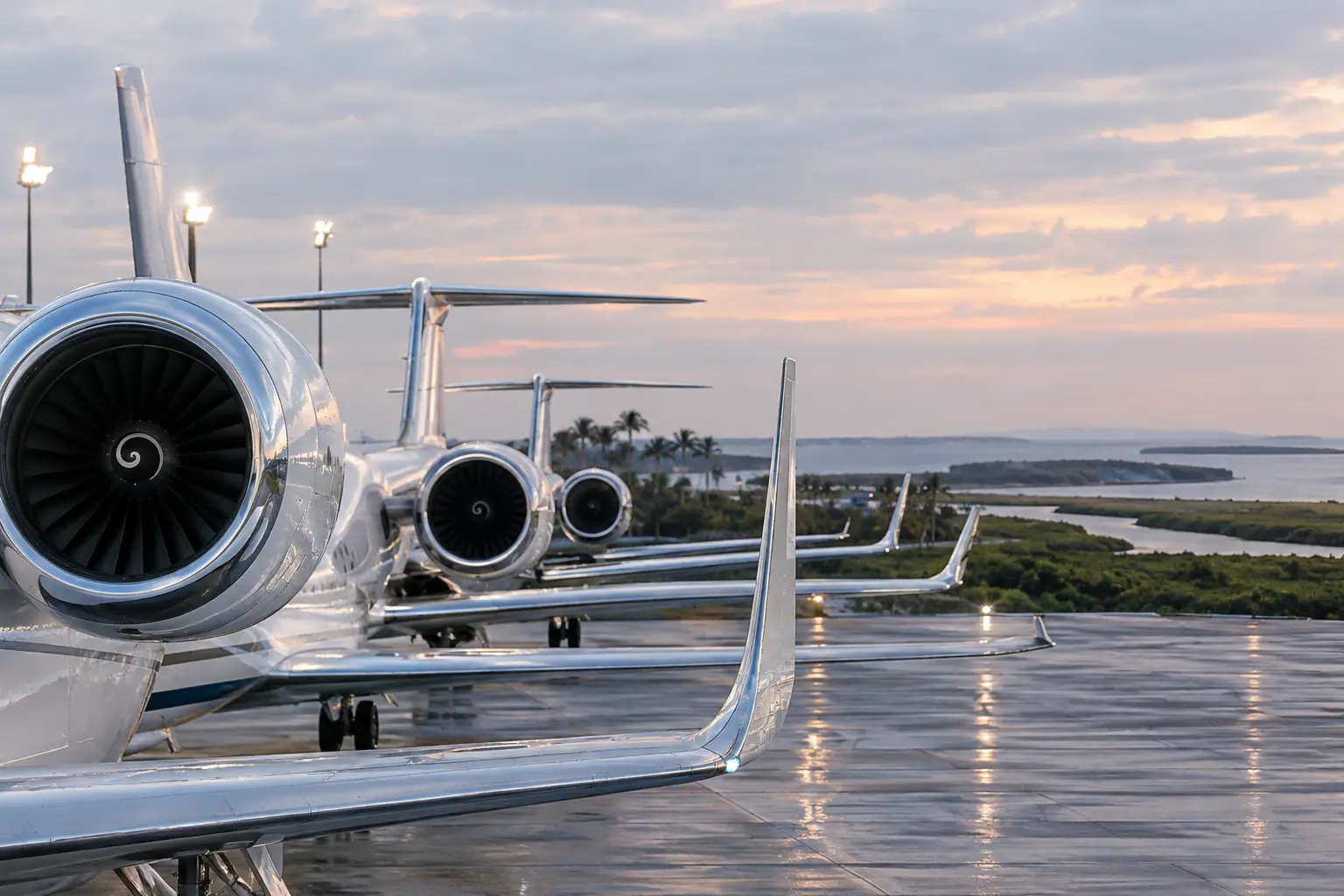
Aircraft classes for Fort Lauderdale
Turboprops carry 6-8 passengers at 300 knots and suit short trips like Fort Lauderdale to Nassau. Light jets seat 4-7 at 430 knots and handle most domestic routes up to 1,400 nm. Midsize jets offer 7-9 seats and 2,100 nm range, while super-midsize and heavy jets cover 3,200 to 4,000 nm for cross-country and Caribbean flights. A heavy jet from Fort Lauderdale to Cabo San Lucas takes about 5 hours and seats 10-14. Each class has trade-offs in cabin comfort, baggage space, and runway performance.
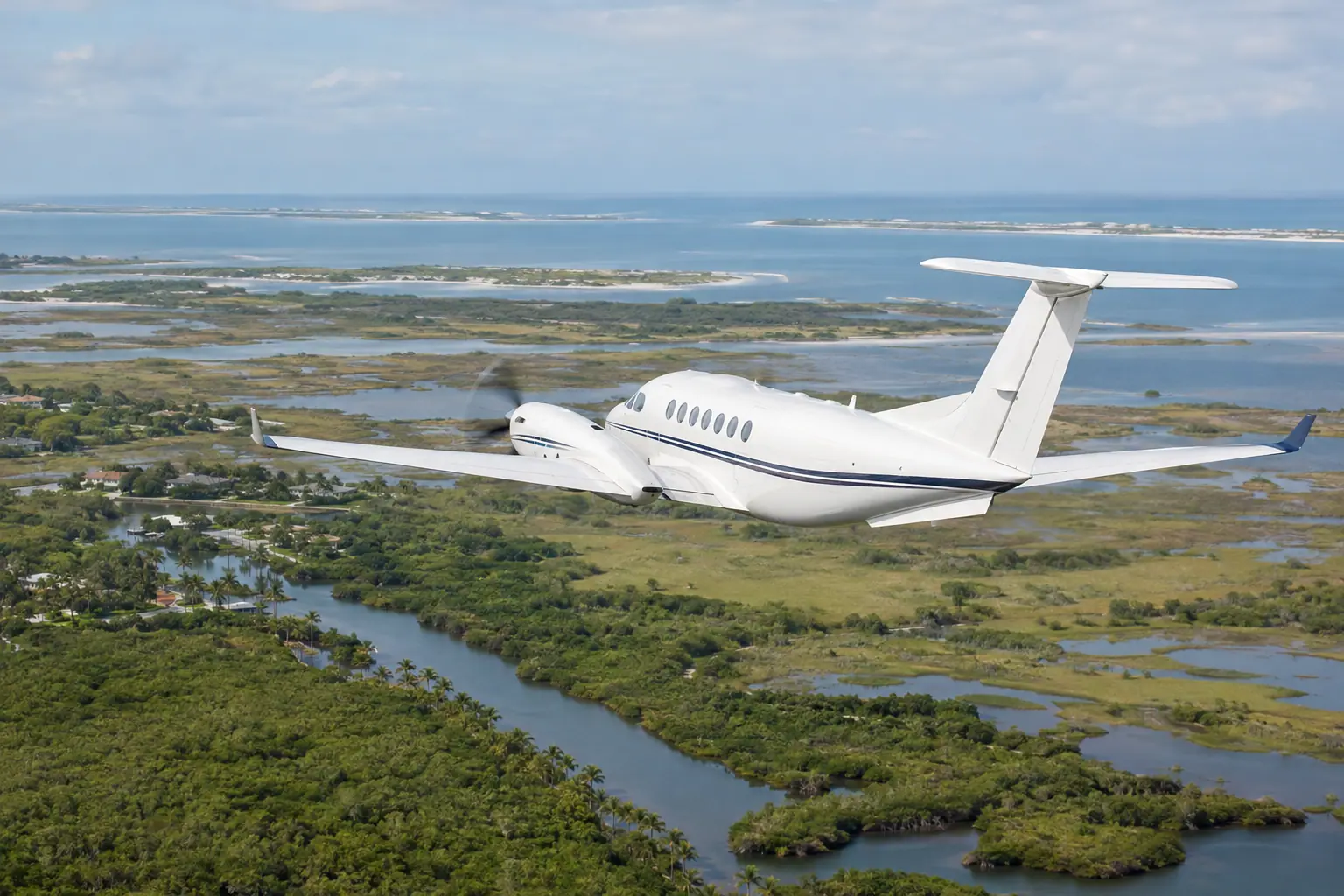
Turboprop
- 6-8 seats
- 300 kt cruise
- 1,500 nm range
Pilatus PC-12 NGX, Daher TBM 960
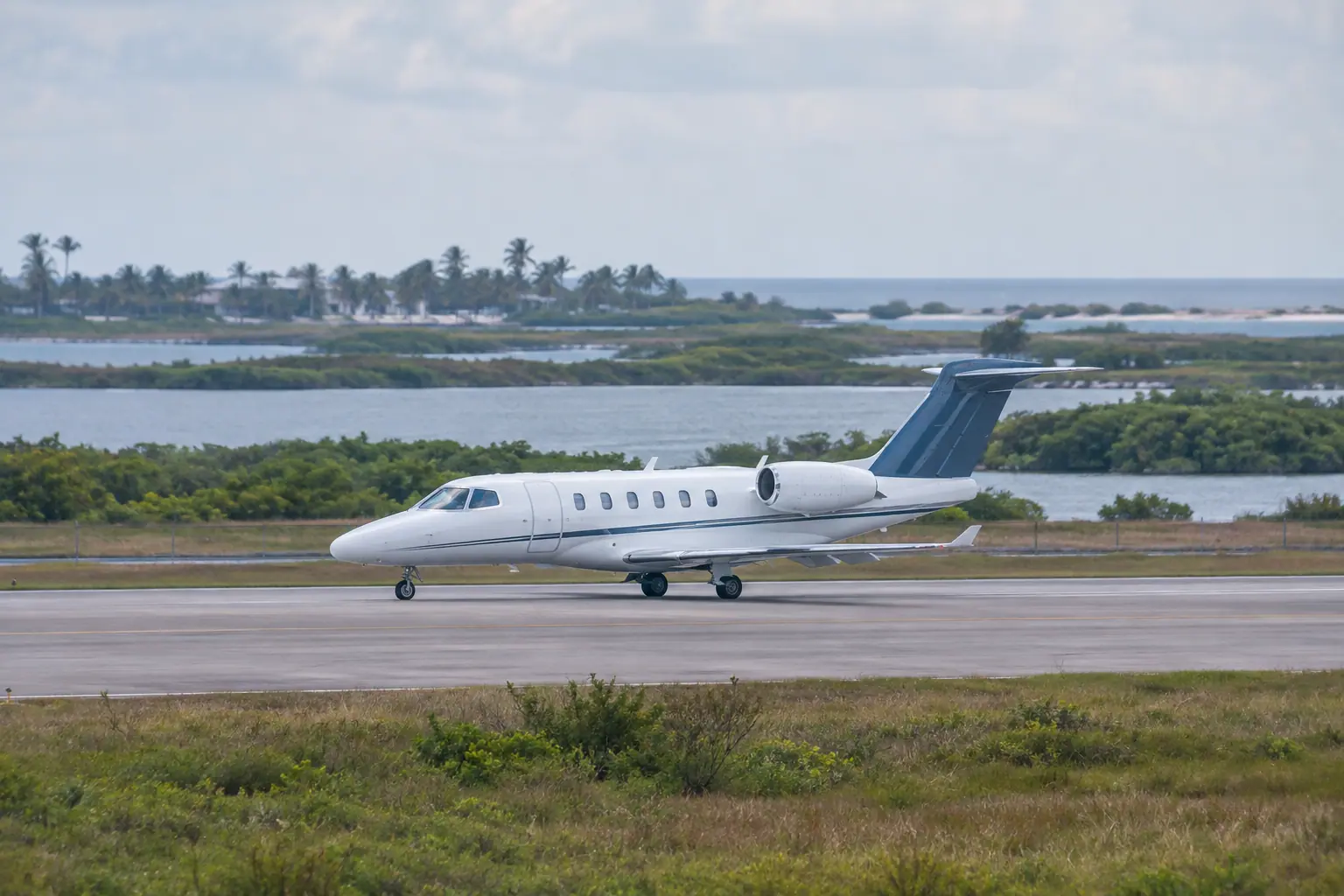
Light jet
- 4-7 seats
- 430 kt cruise
- 1,400 nm range
Pilatus PC-24, HondaJet Elite II
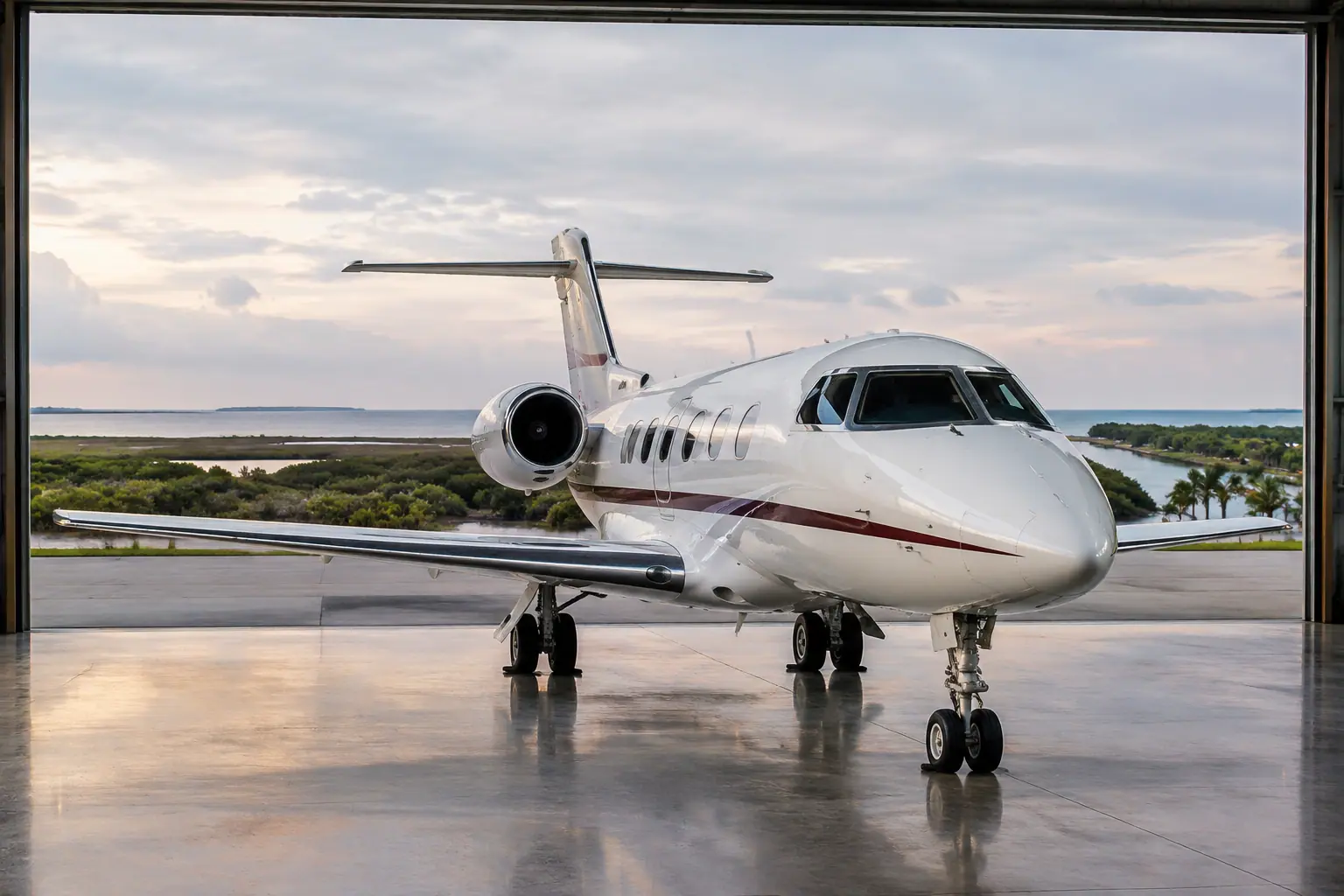
Midsize jet
- 7-9 seats
- 440 kt cruise
- 2,100 nm range
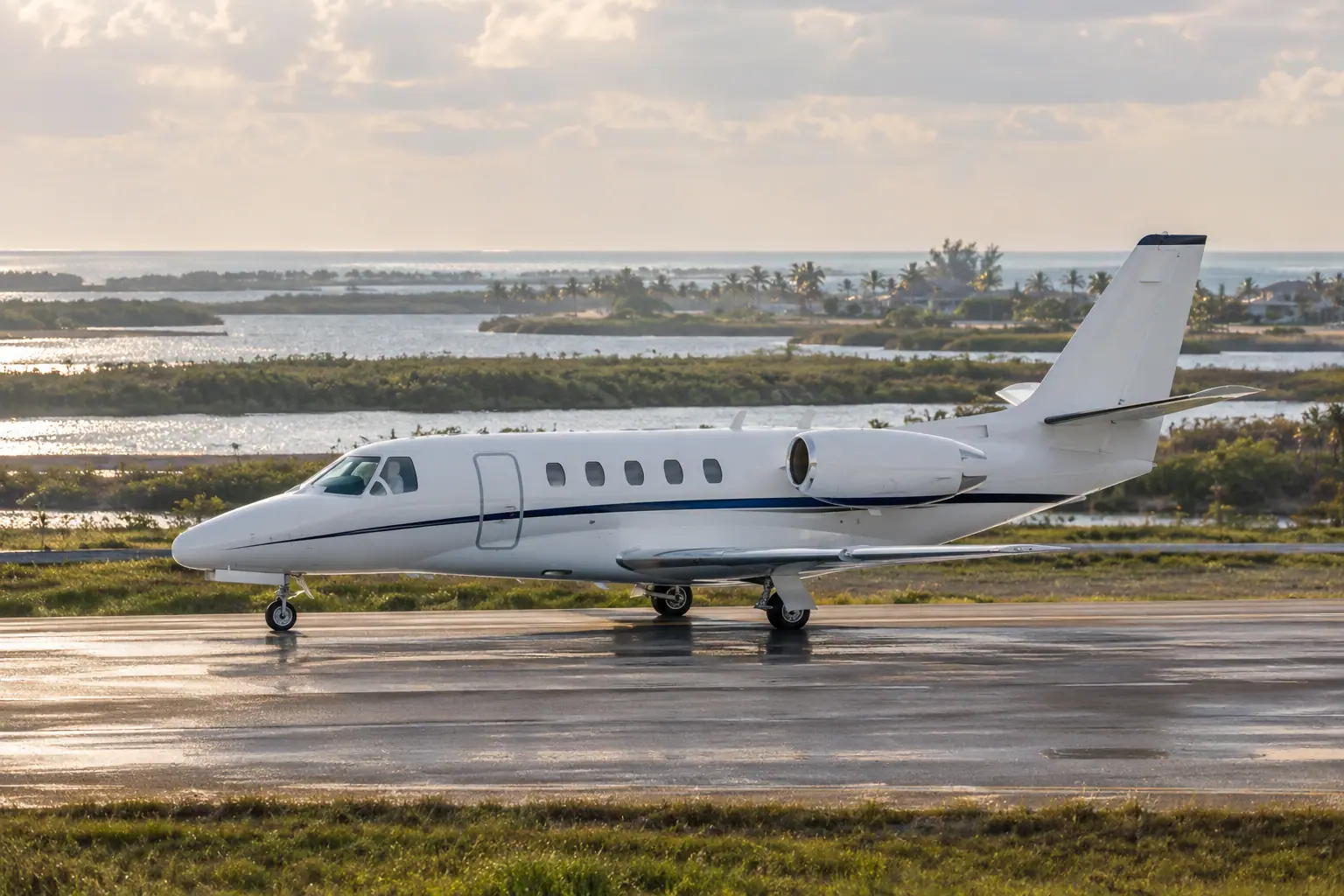
Cessna Citation XLS+, Cessna Citation Latitude
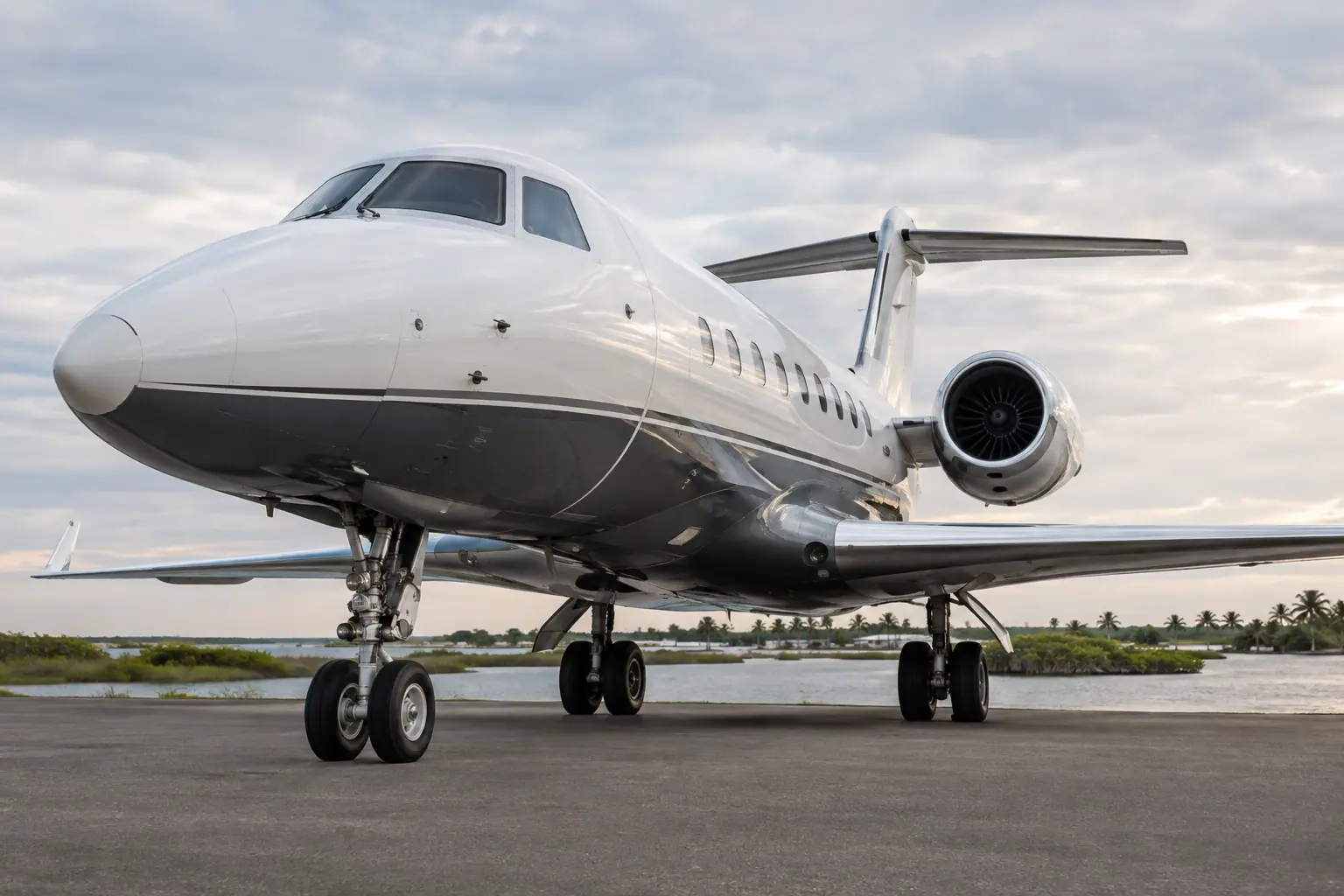
Super-midsize jet
- 8-10 seats
- 470 kt cruise
- 3,200 nm range
Cessna Citation X+, Bombardier Challenger 350
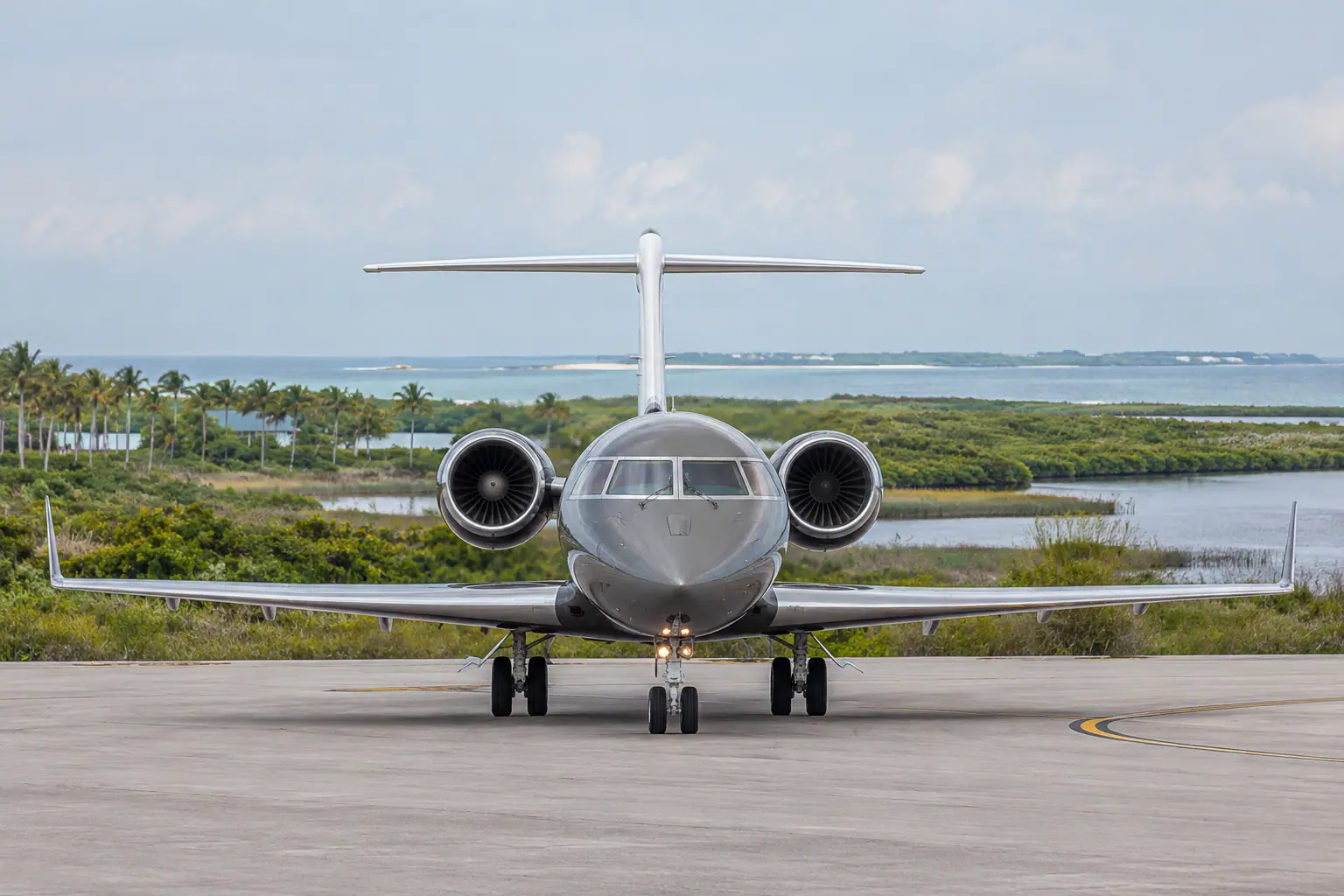
Heavy jet
- 10-14 seats
- 470 kt cruise
- 4,000 nm range
Dassault Falcon 900LX, Gulfstream G450
Heat and storms in Fort Lauderdale
Fort Lauderdale's summer heat and humidity raise density altitude, reducing aircraft performance. In July and August, highs average 87°F and density altitude is about 1,900 ft; at 115°F it peaks at 2,400 ft. On hot afternoons, light jets may face payload or fuel restrictions from shorter runways like KFXE's 6,002 ft. Pilots calculate performance before every departure, but early morning flights often avoid these limits.
The wet season from June to September brings frequent thunderstorms, with 25 wet days in June and 26 in August. Afternoon storms can delay or reroute flights, so build flexibility into your schedule. Charter operators monitor radar and may adjust departure times to avoid convective activity. IFR capabilities and experienced crews handle most weather, but safety always comes first.
Hurricane season runs from June through November, peaking in late summer. When a storm threatens, operators may relocate aircraft, and demand for evacuation flights spikes. Booking well ahead during hurricane season is wise, and travel insurance can protect your charter investment. CBP clearance is required for international returns, so factor that into your timing.
| Month | Avg high | Wet days | KFXE DA | KOPF DA | KBCT DA |
|---|---|---|---|---|---|
| Jan | 75°F | 9 | 1,100 ft | 1,100 ft | 1,100 ft |
| Feb | 77°F | 12 | 1,200 ft | 1,200 ft | 1,200 ft |
| Mar | 79°F | 9 | 1,300 ft | 1,300 ft | 1,300 ft |
| Apr | 82°F | 12 | 1,500 ft | 1,500 ft | 1,500 ft |
| May | 84°F | 16 | 1,700 ft | 1,700 ft | 1,700 ft |
| Jun | 86°F | 25 | 1,800 ft | 1,800 ft | 1,800 ft |
| Jul | 87°F | 24 | 1,900 ft | 1,900 ft | 1,900 ft |
| Aug | 87°F | 26 | 1,900 ft | 1,900 ft | 1,900 ft |
| Sep | 86°F | 24 | 1,800 ft | 1,800 ft | 1,800 ft |
| Oct | 83°F | 18 | 1,600 ft | 1,600 ft | 1,600 ft |
| Nov | 80°F | 13 | 1,400 ft | 1,400 ft | 1,400 ft |
| Dec | 77°F | 12 | 1,200 ft | 1,200 ft | 1,200 ft |
Wet days count rainfall of 1 mm or more. Density altitude computed at the mean afternoon high using a rule-of-thumb formula. Operators rely on their own performance figures.
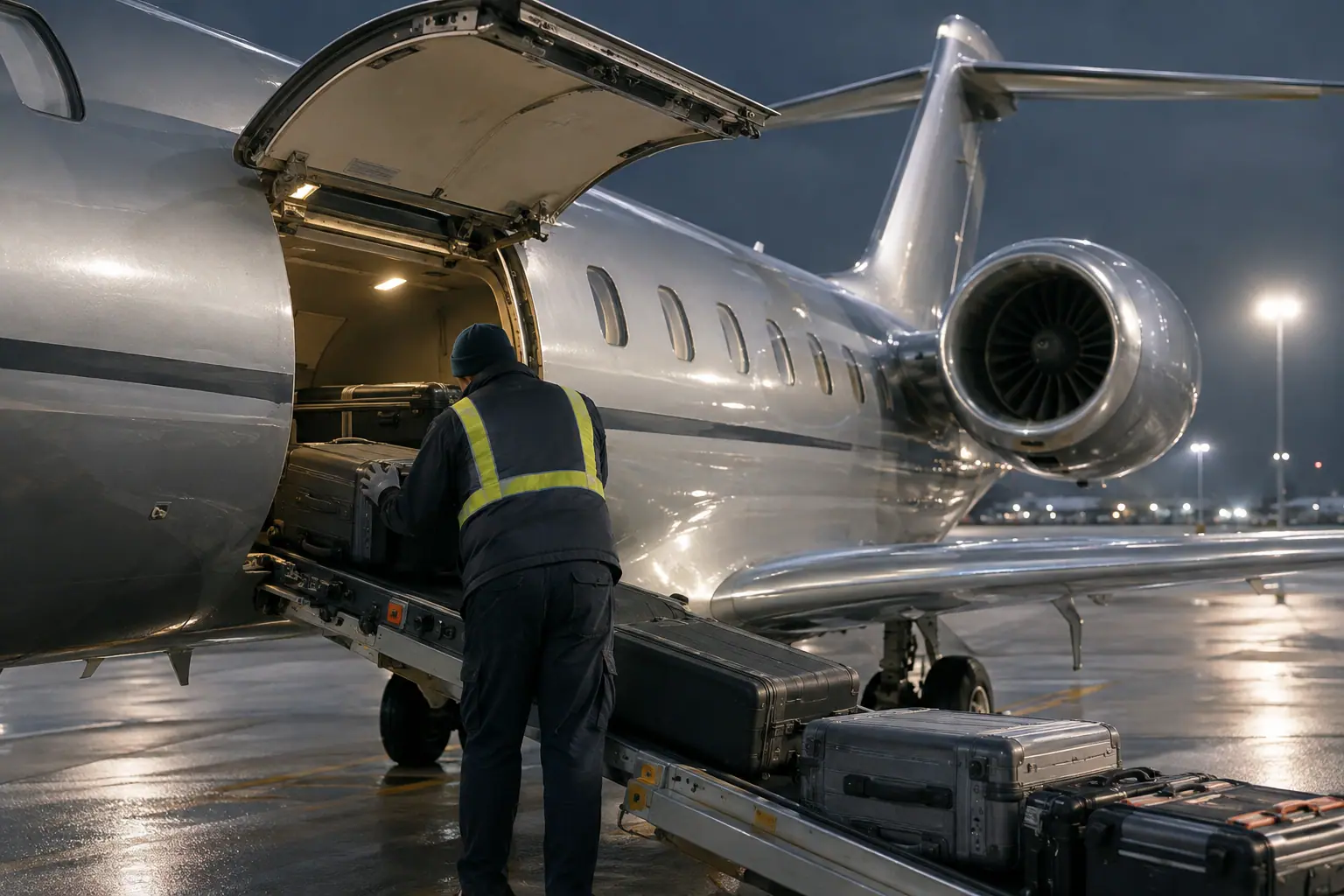
Arranging a Fort Lauderdale charter
Tell us your trip details
Share your route, dates, passenger count, and luggage needs. We use this to match you with suitable aircraft and operators.
Compare quotes
We request quotes from multiple FAA Part 135 operators and present options with clear pricing, including all fees.
Confirm and book
Once you choose, we handle the contract and coordinate with the operator. You receive a confirmation with tail number and FBO details.
Fly and follow up
On the day, the operator manages the flight. We remain available for any changes and follow up after your trip.
Common questions
What is the cost to charter a private jet from Fort Lauderdale to New York?
A light jet from Fort Lauderdale to New York (931 nm) is estimated at $10,000 to $15,000, with a flight time of about 2 hours 34 minutes. Midsize or heavy jets cost more but offer more cabin space. These are estimates; final pricing depends on aircraft availability and date.
Which airport in Fort Lauderdale is best for private jets?
Fort Lauderdale Executive (KFXE) is closest to downtown and the beach, with a 6,002 ft runway and two FBOs. For longer runways, KOPF offers 8,002 ft. The best choice depends on your aircraft and destination; we can advise based on your trip.
How far in advance should I book a private jet to Fort Lauderdale?
During peak season (November to April), book at least two to three weeks ahead. Summer offers more availability, but for specific aircraft or busy weekends, a week's notice is still wise. Last-minute requests can often be accommodated, but choices may be limited.
What is the flight time from Fort Lauderdale to the Bahamas?
A light jet from Fort Lauderdale to Nassau takes about 42 minutes for the 162 nm trip, with estimated costs of $4,000 to $6,000. For Turks and Caicos (508 nm), plan on roughly 1 hour 32 minutes and $6,000 to $9,000. CBP clearance is required for return to the U.S.
Are there private jets that seat 10 or more passengers in Fort Lauderdale?
Yes, heavy jets available in Fort Lauderdale seat 10-14 passengers and have ranges up to 4,000 nm. Super-midsize jets carry 8-10. These are suited for large groups or long transcontinental flights. We can source the right aircraft for your party size.
How does heat affect private jet takeoff from Fort Lauderdale?
In summer, temperatures near 87°F raise density altitude to about 1,900 ft, and at 115°F it reaches 2,400 ft. This can reduce payload or require longer runways. Pilots calculate performance carefully, and early morning departures often mitigate the effects. Safety is always the priority.