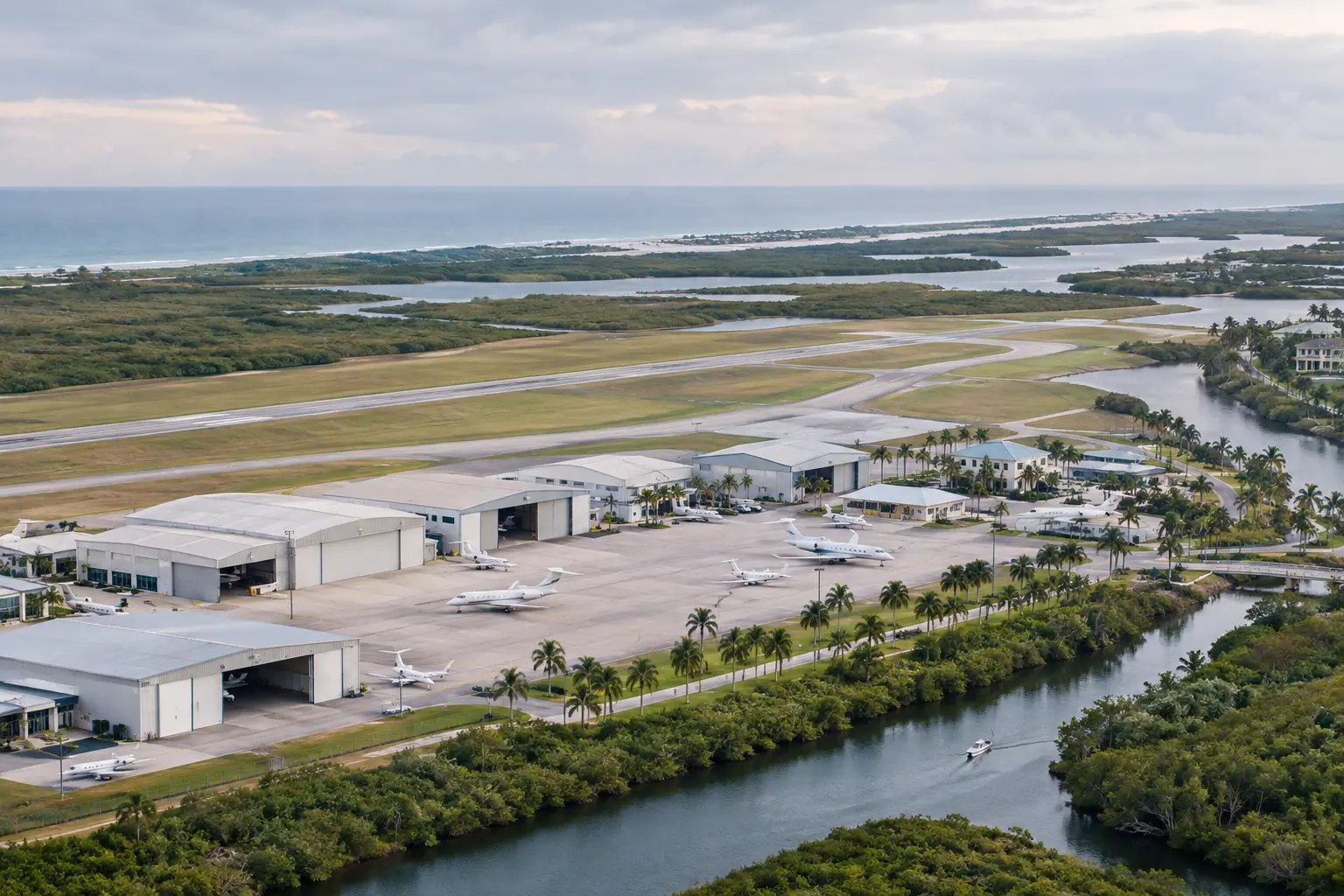
Private jet airports Fort Lauderdale
Choosing among the private jet airports Fort Lauderdale flyers rely on comes down to runway length and drive time. Miami-Opa Locka lists 8,002 feet of runway for hot-day departures. FXE sits closest to the beach and Las Olas.
- Home
- Airports
Fort Lauderdale Executive (KFXE) is the default private jet airport Fort Lauderdale travelers ask for first, with a 6,002-foot runway, 13 feet of elevation and two FBOs on the field. It handles a steady flow of light and midsize jets heading to the Bahamas and up the East Coast. The trade-off is that its shorter runway rules out some heavy jets on long-range departures once density altitude climbs.
The other three fields each solve a different problem. Miami-Opa Locka has the longest runway of the group at 8,002 feet, which matters for a fully fueled super-midsize or heavy jet in July. Boca Raton is quieter and pulls from Palm Beach County, while Fort Lauderdale-Hollywood International has 9,000 feet of runway but shares the field with airline traffic. Your operator's certificate and your destination decide more than the map does.
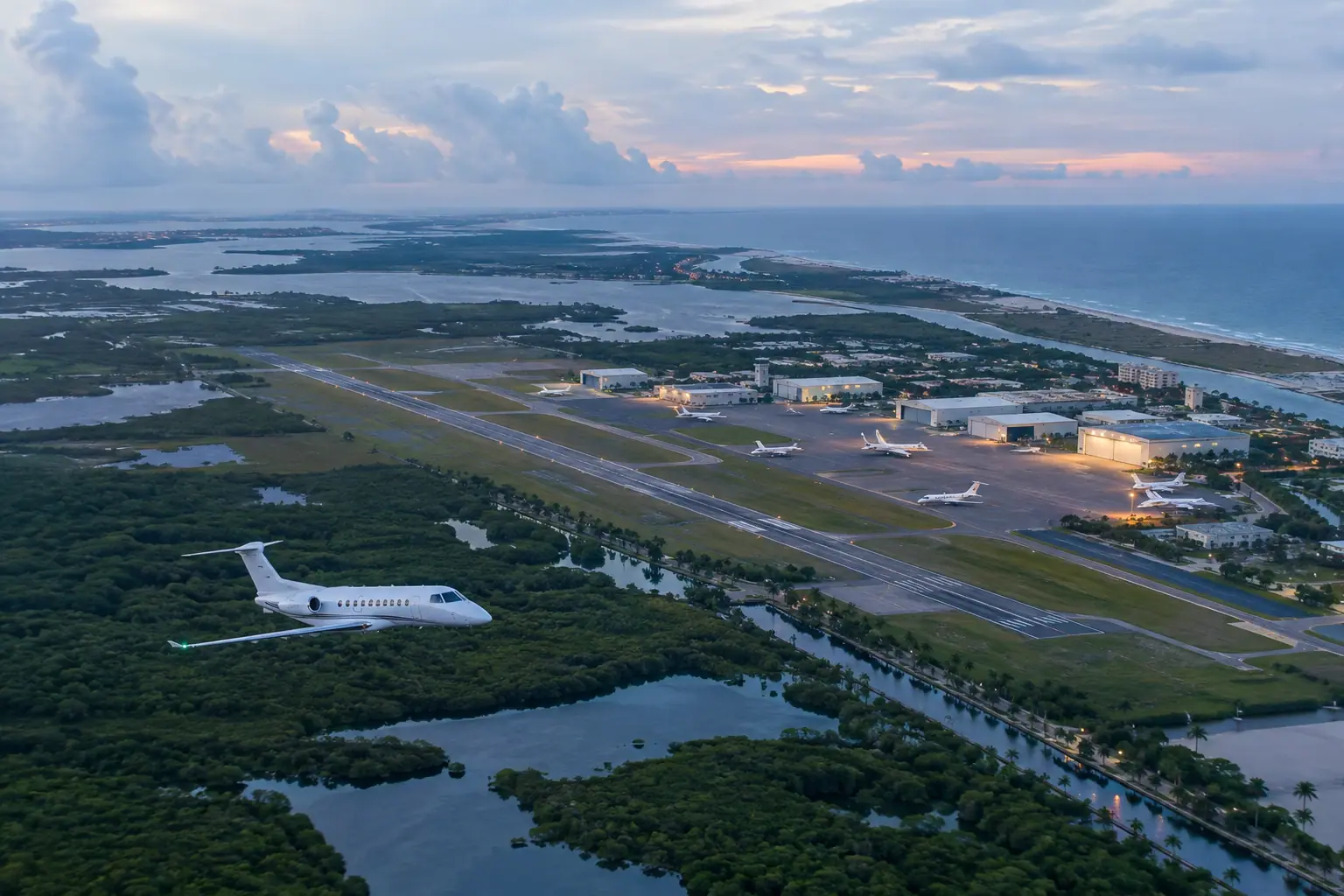
Fort Lauderdale Executive Airport
- KFXE code
- 13 ft elevation
Runways 2, longest 6,002 ft. 5 mi to Las Olas Boulevard. FBO: Signature Aviation, Atlantic Aviation.
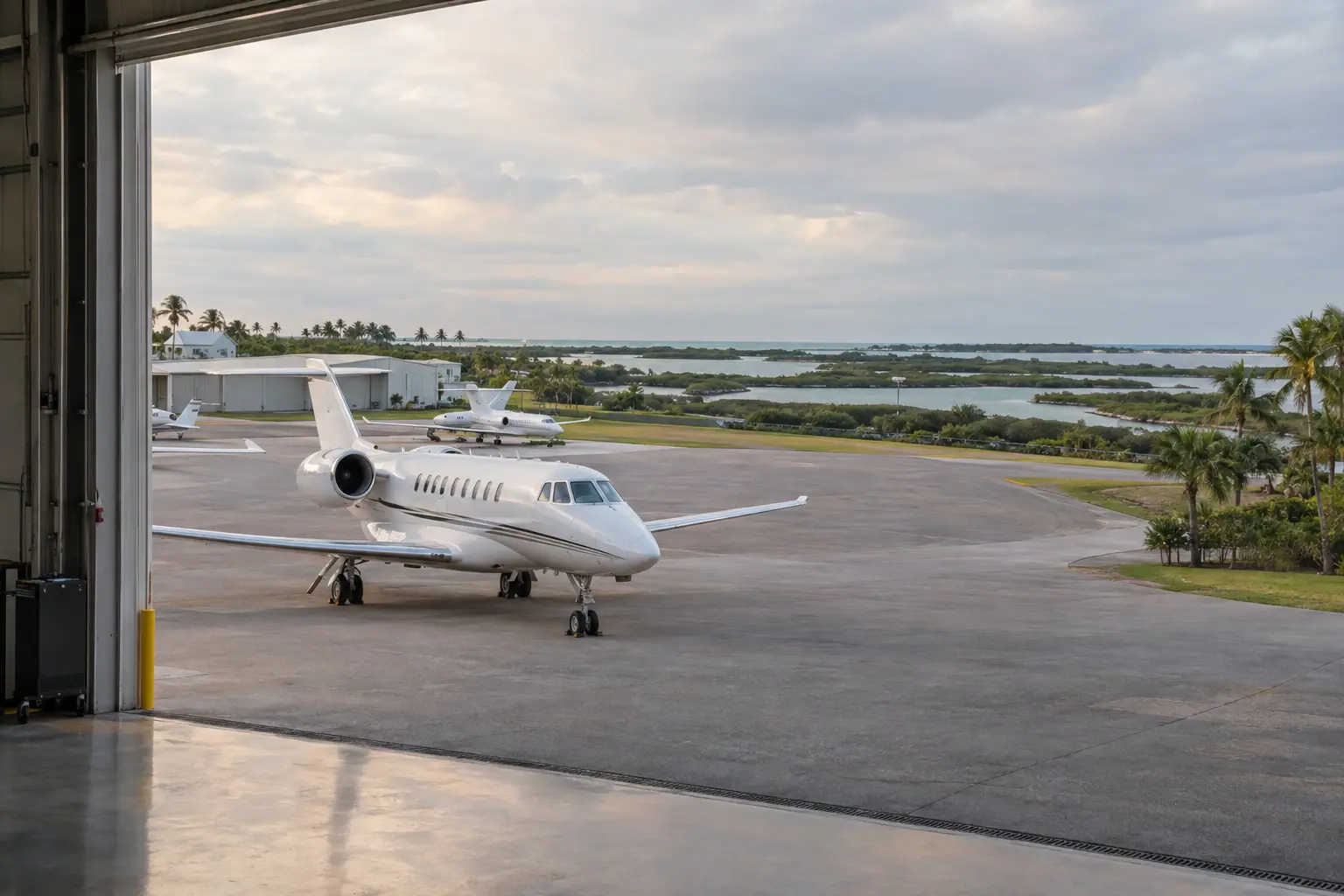
Miami-Opa Locka Executive Airport
- KOPF code
- 8 ft elevation
Runways 3, longest 8,002 ft. 17 mi to Las Olas Boulevard. FBO: Atlantic Aviation, Signature Aviation, Jet Aviation, Fontainebleau Aviation.
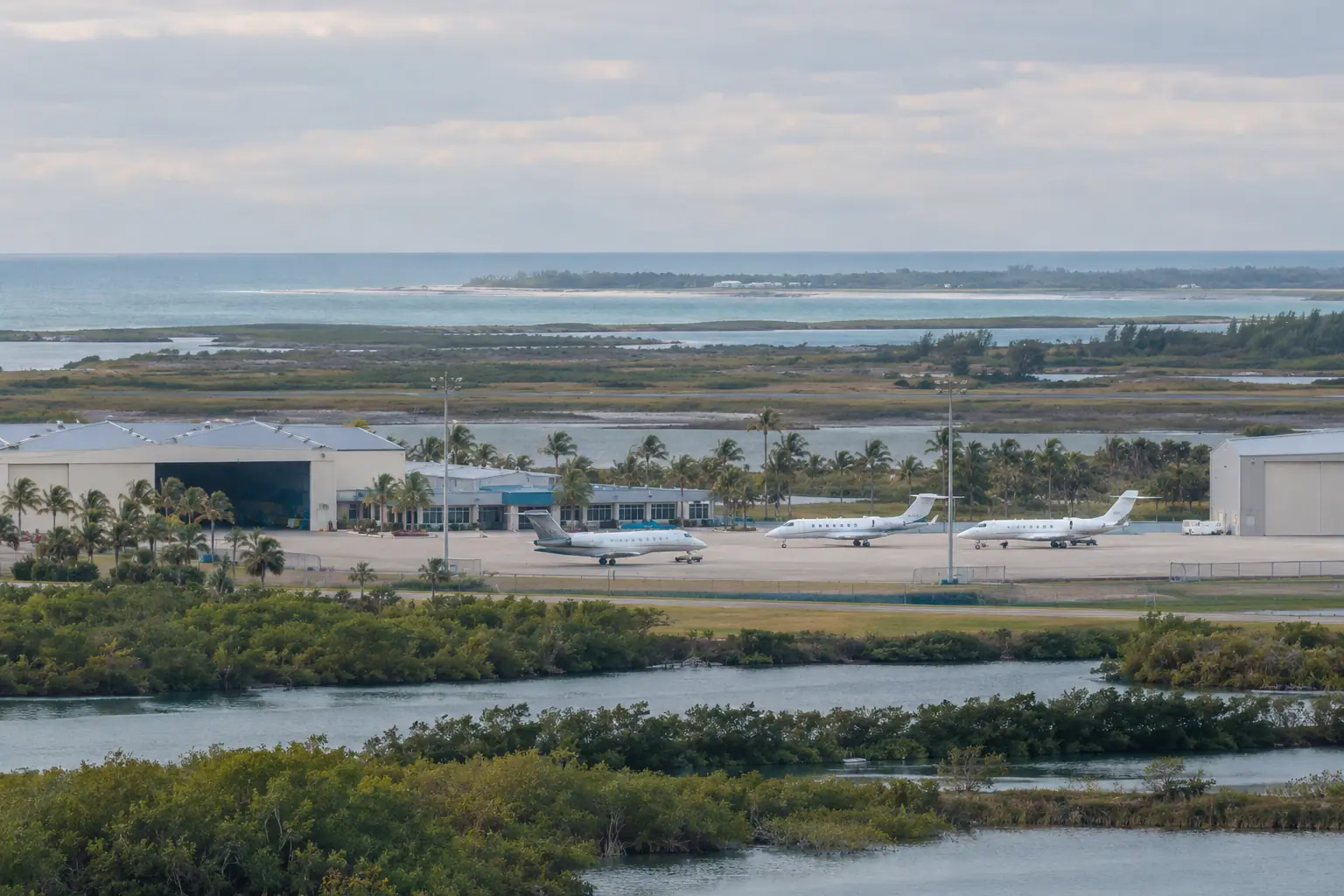
Boca Raton Airport
- KBCT code
- 13 ft elevation
Runways 1, longest 6,276 ft. 18 mi to Las Olas Boulevard. FBO: Atlantic Aviation, Stellar Aviation of South Palm Beach, Signature Aviation.
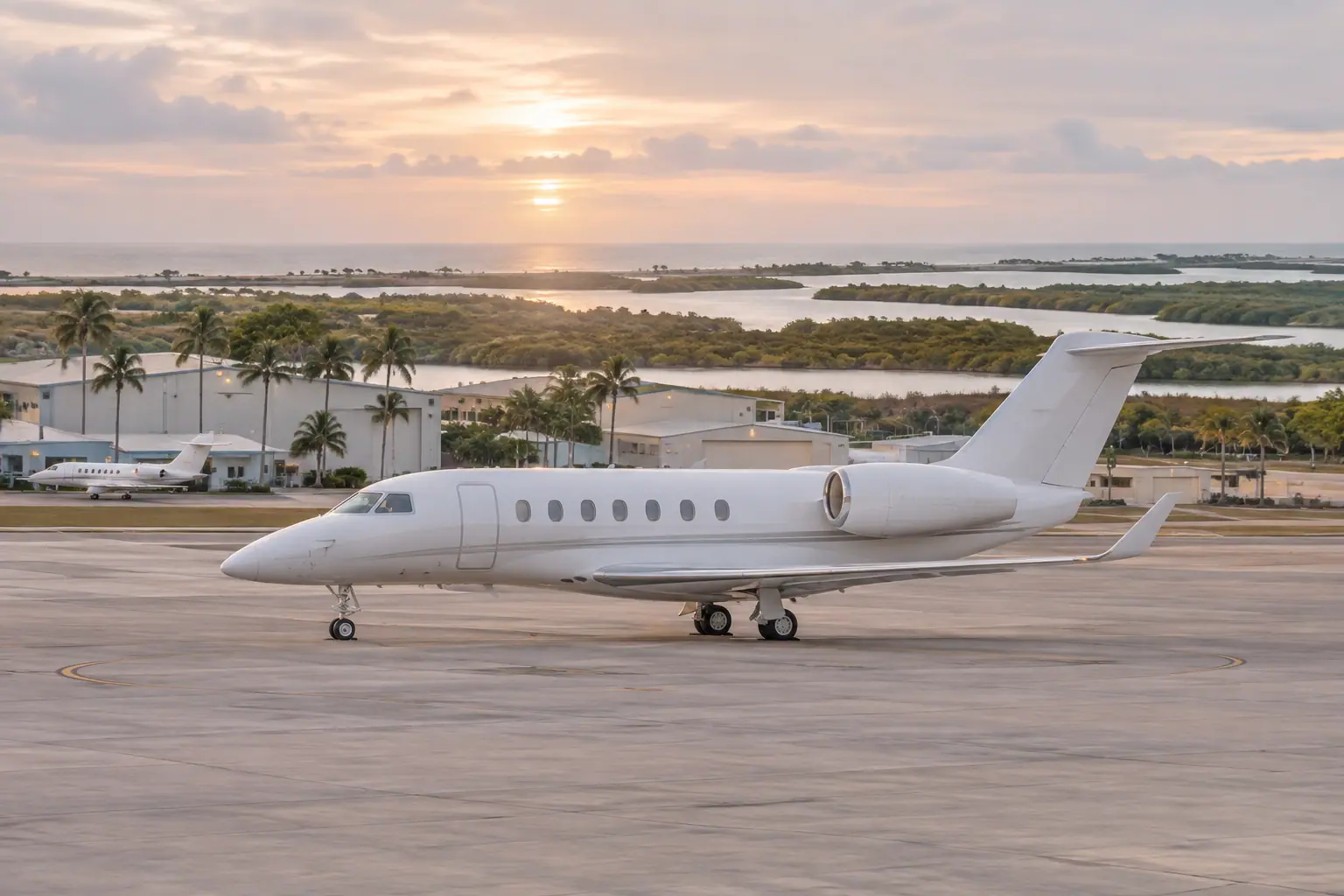
Fort Lauderdale Hollywood International Airport
- KFLL code
- 9 ft elevation
Runways 2, longest 9,000 ft. 3 mi to Las Olas Boulevard. FBO: Sheltair, Fontainebleau Aviation A Skyservice Company, Signature Aviation.
Fort Lauderdale private jet airports
The best private jet airport Fort Lauderdale offers depends on your aircraft and destination, not on which field is closest to your hotel. FXE, OPF and BCT all sit within a short drive of the beach, but only OPF and FLL give you a runway over 8,000 feet. If your jet needs that length on a hot afternoon, then FXE is not the field for that leg. FXE lists 6,002 feet and 13 feet elevation; OPF lists 8,002 feet and 8 feet; BCT lists 6,276 feet and 13 feet; FLL lists 9,000 feet and 9 feet. All four report a July density altitude of 1,900 feet and a peak of 2,400 feet at 115F. When density altitude rises, then a turboprop or light jet may face a payload limit while a super-midsize clears it easily. Charter brokers arrange the flight through FAA Part 135 operators; the operator holds operational control and makes the final performance call. Runway length is only half the decision. Boca Raton and Executive both sit at 13 feet elevation, so neither gains an edge from field height, and the drive from Las Olas to OPF runs longer than the drive to FXE. If you are flying a heavy jet to Europe with full tanks, then OPF or FLL is the practical departure point. If your trip is a light jet hop to Nassau, then FXE saves you road time and usually money. Weather and traffic shape the answer too. Wet days peak at 26 in August, and afternoon thunderstorms can slow ground handling at any of the four fields. When a summer cell parks over the coast, then the operator may hold boarding or reroute around it, which is worth building into your schedule. Brokers track these patterns daily and will tell you which field and time window give the cleanest departure.
| Airport | Elevation | Longest runway | To Las Olas Boulevard | July density altitude |
|---|---|---|---|---|
| Fort Lauderdale Executive Airport | 13 ft | 6,002 ft | 5 mi | 1,900 ft |
| Miami-Opa Locka Executive Airport | 8 ft | 8,002 ft | 17 mi | 1,900 ft |
| Boca Raton Airport | 13 ft | 6,276 ft | 18 mi | 1,900 ft |
| Fort Lauderdale Hollywood International Airport | 9 ft | 9,000 ft | 3 mi | 1,900 ft |
Summer heat at Fort Lauderdale airports
A July density altitude of 1,900 feet is normal at all four airports, and the peak figure of 2,400 feet at 115F is the number that changes departure planning. Thin air reduces lift and engine margin, so a runway that looks generous in January can become limiting in August. If you are flying a light jet to the Bahamas on a hot afternoon, then your operator may cap baggage or seats to stay within performance limits.
The monthly pattern is steady: highs run from 75F in January to 87F in July and August, with the density altitude tracking from 1,100 to 1,900 feet. Wet days peak at 26 in August, which can slow ground handling and push back your slot. Boca Raton and Executive both sit at 13 feet elevation, so neither gains an edge from field height; runway length and aircraft type do the real work.
That is why the same jet can leave FXE comfortably in February and need OPF or FLL in August. When you book a summer departure, then ask the operator for the performance numbers at the forecast temperature rather than the standard-day figures. A broker who knows these four fields will steer you to the runway that fits the day, not just the one on the itinerary.
Questions
Which private jet airports Fort Lauderdale travelers use most?
Fort Lauderdale Executive (KFXE) is the most common choice for light and midsize jets, with a 6,002-foot runway and two FBOs. Miami-Opa Locka (KOPF) draws longer-range aircraft because of its 8,002-foot runway. Boca Raton (KBCT) and Fort Lauderdale-Hollywood International (KFLL) round out the four, and FLL has the longest runway at 9,000 feet. Drive time and traffic on I-95 separate them more than distance does.
How much does a private jet charter from Fort Lauderdale cost?
Light jet hourly rates run from $3,800 to $5,800, so a short hop like Fort Lauderdale to Nassau (162 nm, about 0h 42m) typically prices between $4,000 and $6,000. A cross-country leg such as Fort Lauderdale to Los Angeles (2,033 nm, 6h 01m) runs $23,000 to $35,000 in a light jet. These are estimates; the operator's quote is the binding figure.
Can a heavy jet use Fort Lauderdale Executive?
Sometimes, but not always. FXE has a 6,002-foot runway at 13 feet elevation, and with a July density altitude of 1,900 feet a heavy jet bound for Europe may need a fuel stop or a different field. If your trip calls for a heavy jet with full tanks, then Miami-Opa Locka's 8,002-foot runway or FLL's 9,000 feet is the more practical departure point.
What is density altitude and why does it matter here?
Density altitude is the altitude the aircraft's wings and engines perform as if they were at, given the heat and humidity. All four airports report 1,900 feet in July and a peak of 2,400 feet at 115F. When that number rises, then takeoff distance grows and payload may drop, which is why summer departures are planned around the coolest available window.
Do I need customs at these airports?
For international legs, yes. CBP clearance is arranged at the field your operator uses, and not every FBO at every airport handles it on the same schedule. If you are returning from the Bahamas or Turks and Caicos, then confirm the clearance arrangement before you book. Your broker should tell you which field and FBO the operator will use and what time CBP is available.
How far are these airports from the beach and the strip?
FXE is the closest to the beach and Las Olas, which is why it is the usual pick for leisure trips. OPF and BCT sit farther out but offer more runway or a quieter ramp. FLL is closest to Port Everglades and the convention center. Each exact drive time depends on traffic on I-95 and I-595, so build in a buffer.
Which airport handles a light jet better on a hot day?
On a hot day, a light jet with a 1,400 nm typical range does best from a longer runway, so OPF at 8,002 feet or FLL at 9,000 feet gives more margin than FXE's 6,002 feet. If the trip is a short Bahamas leg, then FXE's shorter runway rarely limits a light jet and saves drive time.
How does a broker choose between these fields for a charter flight?
A broker weighs runway length, the operator's performance numbers and your ground time. OPF, FXE, BCT and FLL all list a July density altitude of 1,900 feet, so aircraft type does most of the deciding. Under DOT Part 295, we act as your agent; the FAA Part 135 operator holds operational control and signs off on the departure field.